This absolutely lyrical novel by renown writer Amin Maalouf has certainly made some connections in my head. Let me not go so far as to say that he was writing this with HIV in mind, but I very much doubt that he was writing it from a "place" free of HIV.
To explain a little. The novel sets off with a scientist and his journalist wife stumbling over a scoop that there exists a drug that favours male births. At first their worries are paid no heed by the general public, but after some time, after being confronted with birth statistics, the general public starts to realize that this is actually the case.
A decrease in female births, naturally leads to a decrease in births. The tendency in the novel, was that especially in so-called developing (3rd world) countries, giving birth to boys had higher status than giving birth to girls.
Now how does this relate to HIV? Well, Once it has been revealed for all that there in fact does exist a drug favouring male births, a person of influence in politics on an international level, comes out and declares that this is a good thing! If people of poor countries give birth to fewer girls, there will eventually be less people. Instead of this drug posing a problem, it is posing a solution to overpopulation and poverty in these countries!
Quite a few people are taken in by this argument, and the trend of giving birth to mostly boys reach the Western countries too. Once the generation of mostly boys start entering their puperty, the flaws of this "perfect solution" are revelead, however. Because of the lack of girls, the boys growing up are becoming more frustrated, violent and depressed. Adam needs his Eve!
To return to MY argument, what this makes me wonder, is at people's attitutes towards poverty and the so-called 3rd world countries. It makes me wonder if a lot of people can ignore the huge threat we are facing with the HIV pandemic, on the basis that some "good" comes from it (such a lethal disease surely keeps the world and the 3rd world countries from overpopulating). It also makes me wonder if we will only take serious action once it hits home with the same force it has hit other parts of the world(parallel to how in the novel, people only realized their errors when they saw how the boys were turning out).
This is yet another North/South dichotomy. The North refuses to take responsibility as long as the problems remain in the South. What we don't realize is that if we don't help them there, it's going to get us too eventually. It's only a question of time.
Monday, 14 December 2009

Eulogy to a Figure
Dearest Lisa,
You are certainly not the average face of HIV. The first time I saw you, you stood out in the crowd so starkly, with your white skin and your "mlongo"/ "ngamla" (spelling?) ways. Being Afrikaans amongst mostly zulu/sotho women, could surely not have been easy. And for someone with such a strong personality, it must have been even more difficult. You had your fair share of drama. Not overrun by anyone. Not outtalked by any language. And despite dodging your duties, you never meant any harm.
You are certainly not the average face of HIV. The first time I saw you, you stood out in the crowd so starkly, with your white skin and your "mlongo"/ "ngamla" (spelling?) ways. Being Afrikaans amongst mostly zulu/sotho women, could surely not have been easy. And for someone with such a strong personality, it must have been even more difficult. You had your fair share of drama. Not overrun by anyone. Not outtalked by any language. And despite dodging your duties, you never meant any harm.
Certainly not the average face of HIV. Not the victim, although you had your pains. Broke, but never without a plan for how to afford more cigarettes. You wore a death sentence, yet still had the hope of going to England to visit your sister.
It saddens me greatly to know you are gone, Lisa. Even tho you were different, you shed light. You had things to say, things to do, stories to tell. You were funny, oh so funny. And when you’d laugh –there was such an innocence to it.
Oh the times when you’ve escaped the matrons… Running between Berea and the Village. Because of this, you were probably the one to know everyone best.
Lisa, I always considered you an ally. A friend. You always treated me as a friend, and I hope you felt the same about me. And I hope you know that I care about you.
Your time came. You have exited this world and entered the world of statistics. You have become a figure (but not to me and not to those who knew you). Perhaps your death was a mercy; to spare you more pain (I know how ill the ARVs made you). You will certainly be missed. And if I ever wander from 34 Vereeniging Service Road up the hill to Calvary Christian College to pick up the kids again, I will think of the last time we went that way together. I’ll think about how much you hoped to be able to go visit your sister. And how I’d somehow always feel in a good mood when I was with you. About how you’d wave me over to share some plot with me, some secret. And about that time you took some extra food in the kitchen and just managed to hide it before getting caught (and how you almost gave yourself away). And the next time I gaze upon the big tree on the lawn right outside the gates of the Village, I’ll think about the times when I’ve stood here with you, keeping you company when you went outside for a smoke.
Wherever you are Lisa, I wish you all the best. And I wish you rest. Not the average face of HIV. Not the average face of anything. I will remember you in my heart.
Sunday, 25 October 2009
The new white man's burden
The white man's burden was an excuse, an ideology, to justify imperialism in its time. It is also a poem by Rudiyard Kipling which can be viewed here.
Basically, the white man's burden was the obligation the white man had, to "civilize" the so-called "black continent", the darkest Africy (colonies in other places were also included in the civilizing mission).
Today, I feel that there is a new kind of white man's burden at work. It is mostly found in the language used by well-meaning white people. And even if it is well-meaning, it doesn't mean that it is harmless.
What I am referring to, is the following: Some people/ groups who are involved with and enthusiastic about charity work directed at African countries (or other development countries), have a tendency of referring to these countries of "less fortunate" people as more or less helpless, if not for the help that we, in the rich and educated Europe, can offer them. This language signalizes that these countries are unable to help themselves, have no agency of their own, etc etc. We are faced with a stereotyped African.
Keep in mind that African countries have, all on their own, been able to remove the chains of oppression, the shackles put onto them, by colonialism. They freed themselves. South Africa has raised people like Nelson Mandela, and he can symbolize the agency and power that all people have the potential of having. Not just Europeans who happen to have internet access or rich parents.
I am not arguing against charity work or trying to discourage anyone from trying to help others. What I have a problem with, is the patronizing language, the image of the "African" we are selling, or have bought into. What we should rather focus on, instead of thinking of them as helpless if it weren't for our help, is of empowerment. What we can contribute to, is empowerment.
I also have to ask myself if we use this language, the language of the "helpless African", to somehow make ourselves feel better about helping. If it is a motivating factor, if people will give more, if they believe they are helping someone who is unable to help themselves. I also wonder if the white man's burden TODAY, is the burden of what the white man did in the past. If we are constantly suffering from a guilty conscious of imperialism, and is trying to make up for it.
Basically, the white man's burden was the obligation the white man had, to "civilize" the so-called "black continent", the darkest Africy (colonies in other places were also included in the civilizing mission).
Today, I feel that there is a new kind of white man's burden at work. It is mostly found in the language used by well-meaning white people. And even if it is well-meaning, it doesn't mean that it is harmless.
What I am referring to, is the following: Some people/ groups who are involved with and enthusiastic about charity work directed at African countries (or other development countries), have a tendency of referring to these countries of "less fortunate" people as more or less helpless, if not for the help that we, in the rich and educated Europe, can offer them. This language signalizes that these countries are unable to help themselves, have no agency of their own, etc etc. We are faced with a stereotyped African.
Keep in mind that African countries have, all on their own, been able to remove the chains of oppression, the shackles put onto them, by colonialism. They freed themselves. South Africa has raised people like Nelson Mandela, and he can symbolize the agency and power that all people have the potential of having. Not just Europeans who happen to have internet access or rich parents.
I am not arguing against charity work or trying to discourage anyone from trying to help others. What I have a problem with, is the patronizing language, the image of the "African" we are selling, or have bought into. What we should rather focus on, instead of thinking of them as helpless if it weren't for our help, is of empowerment. What we can contribute to, is empowerment.
I also have to ask myself if we use this language, the language of the "helpless African", to somehow make ourselves feel better about helping. If it is a motivating factor, if people will give more, if they believe they are helping someone who is unable to help themselves. I also wonder if the white man's burden TODAY, is the burden of what the white man did in the past. If we are constantly suffering from a guilty conscious of imperialism, and is trying to make up for it.
Wednesday, 7 October 2009
A place called home
I recently returned home to Tromsø after 7 months in Joburg. Just landing in Oslo, I "knew" that this isn't home anymore. There was something about the way people don't look into each others eyes. About the way it's cold. About the irritation I felt at hearing Norwegian spoken all around me. And when I finally placed my feet inside my childhood home again, there was no doubt in my mind that I don't belong here.
Shortly after my return, I spoke to a friend of mine. After hearing how I was dealing (or not) with the return, he said "there's no coming home". There's never any coming back. And what he continued to say was, "and if you go back to SA, it won't be the same either".
Well, I did go back. Just for a week, 6 weeks after coming home to Tromsø again. And in part, he was right. In part he was wrong.
It feels like I've had two homes in Joburg. At the end of my longer stay, one of them became more distant to me, for different reasons, yet I still felt at home there. Now when I revisited this home again, my feelings are more uncertain. So many things had changed. I was happy to be back, yet I felt estranged. This is a place of constant change. It does not accomodate constancy. Everyone are guests here, and my place there can never again be what it was. I no longer had my place there, I was just saying hi.
My second Joburg home was different. Upon arrival, I still felt completely at home there. But also here, some things were changed. Some members were absent for the duration of my stay, changing the dynamics and the experience altogether. Yet it did not change the feeling of peace and contentment. The "home" might be slightly altered, yet it was still home.
Being back in Tromsø for the 2nd time, I can only note the contrast between where I want to be, and where I am. I'm at home, but I'm not at home. The dream now is to go and stay in Joburg again next year. If I do, tho, I'll go there in a completely different capacity than before. Will that change the experience of "home"?
If there's no returning, if there's never any "coming home", then where are we all going? Are we all homeless, orphans, have we all cut the umbilical cord? Are we all longing back to a fictional past or imagined future?
They say that the human condition is strongly infuenced by a feeling of loss. The loss of the vomb, the loss of innocence, etc etc. A longing back, nostalgia, and for some, an insatiable hunger to get away, away, away. Are we running away from something, or to something?
Or are we doomed to create new homes at every turn? To adapt to change, to start nesting all over again, to create a place we can call home?
I've had a few homes in my life. But to recreate them seems impossible. There is no returning. Those homes had their time and space. I am beyond both these times and spaces.
"A Place Called Home" by P J Harvey
One day
I know
We'll find
A place of hope
Just hold on to me
Just hold on to me
Walk tight
One line
You're wanted
This time
There's no-one to blame
Just hold on to me
And I'm right on time
And the birds keep singing
And you're right on line
And the bells keep ringing } come on my love
And the battle is won
And the planes keep winging
And I'm right on time
And the girl keeps singing
I walk
I wade
Through full lands
And lonely
I stumble
I stumble
With you
I wait
To be born
Again
With love comes the day
Just hold on to me
Now is the time to follow through, to read the signs
Now the message is sent, let's bring it to its final end
One-day-I-know-there'll-be-a-place-called-home.
Shortly after my return, I spoke to a friend of mine. After hearing how I was dealing (or not) with the return, he said "there's no coming home". There's never any coming back. And what he continued to say was, "and if you go back to SA, it won't be the same either".
Well, I did go back. Just for a week, 6 weeks after coming home to Tromsø again. And in part, he was right. In part he was wrong.
It feels like I've had two homes in Joburg. At the end of my longer stay, one of them became more distant to me, for different reasons, yet I still felt at home there. Now when I revisited this home again, my feelings are more uncertain. So many things had changed. I was happy to be back, yet I felt estranged. This is a place of constant change. It does not accomodate constancy. Everyone are guests here, and my place there can never again be what it was. I no longer had my place there, I was just saying hi.
My second Joburg home was different. Upon arrival, I still felt completely at home there. But also here, some things were changed. Some members were absent for the duration of my stay, changing the dynamics and the experience altogether. Yet it did not change the feeling of peace and contentment. The "home" might be slightly altered, yet it was still home.
Being back in Tromsø for the 2nd time, I can only note the contrast between where I want to be, and where I am. I'm at home, but I'm not at home. The dream now is to go and stay in Joburg again next year. If I do, tho, I'll go there in a completely different capacity than before. Will that change the experience of "home"?
If there's no returning, if there's never any "coming home", then where are we all going? Are we all homeless, orphans, have we all cut the umbilical cord? Are we all longing back to a fictional past or imagined future?
They say that the human condition is strongly infuenced by a feeling of loss. The loss of the vomb, the loss of innocence, etc etc. A longing back, nostalgia, and for some, an insatiable hunger to get away, away, away. Are we running away from something, or to something?
Or are we doomed to create new homes at every turn? To adapt to change, to start nesting all over again, to create a place we can call home?
I've had a few homes in my life. But to recreate them seems impossible. There is no returning. Those homes had their time and space. I am beyond both these times and spaces.
"A Place Called Home" by P J Harvey
One day
I know
We'll find
A place of hope
Just hold on to me
Just hold on to me
Walk tight
One line
You're wanted
This time
There's no-one to blame
Just hold on to me
And I'm right on time
And the birds keep singing
And you're right on line
And the bells keep ringing } come on my love
And the battle is won
And the planes keep winging
And I'm right on time
And the girl keeps singing
I walk
I wade
Through full lands
And lonely
I stumble
I stumble
With you
I wait
To be born
Again
With love comes the day
Just hold on to me
Now is the time to follow through, to read the signs
Now the message is sent, let's bring it to its final end
One-day-I-know-there'll-be-a-place-called-home.
Wednesday, 31 December 2008
Newsflashes
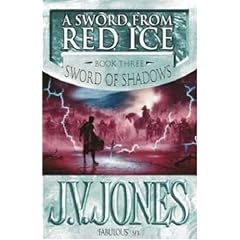
An irritating/ joyful surprise. Just before Christmas I purchased what I believed to be the final book in the Sword of Shadows-trilogy, A Sword from Red Ice. With only a 100 pages left I was starting to question whether or not this COULD be the final book. Too much was left to sort out. So I check the author, J. V. Jones' web page, and lo! and behold, another book is due at the end of 2009. I'm glad, because this means that I have another book to look forward to, but annoyed because I thought I would know the answers soon. Waiting another year (or more) will ruin the momentum, but so be it.

Whilst checking out her page, I also decided to see when the next novel in the A Song of Ice and Fire-series by George R R Martin is due. Turns out the plan is seven books in all, and I have read 3 of these. Lots of good reading to look forward to. BUT the big surprise here was, apparently HBO is planning to make a series out of the books! The idea is really really kewl, and I hope, if they do, that they make the effects sexy and believable. The series can only be as succesful visually as it is in book form, unless they make it REAL, LOTR-real...
So it seems there are a number of books to look forward to in the coming year. 2009 is very soon upon us, so happy new year to every fantasy-lover out there:D
Whilst checking out her page, I also decided to see when the next novel in the A Song of Ice and Fire-series by George R R Martin is due. Turns out the plan is seven books in all, and I have read 3 of these. Lots of good reading to look forward to. BUT the big surprise here was, apparently HBO is planning to make a series out of the books! The idea is really really kewl, and I hope, if they do, that they make the effects sexy and believable. The series can only be as succesful visually as it is in book form, unless they make it REAL, LOTR-real...

So it seems there are a number of books to look forward to in the coming year. 2009 is very soon upon us, so happy new year to every fantasy-lover out there:D
Sunday, 14 December 2008
How literate are you?
According to the BBC most people (Brits in this case), have read only six out of the hundred books listed below. I stole this list from Ziarah's blog En Leseblogg, but the real source is BBC's Big Read (2003).
Feel tagged if you want:
1) Mark the books you have read with bold
2) Underline the books you want to read (since ctrl - u is not working in my blog for unknown reasons, I'm rather changing the colour of the books in question)
3) Put the books you love in italics
1 Pride and Prejudice - Jane Austen
2 The Lord of the Rings - JRR Tolkien
3 Jane Eyre - Charlotte Bronte
4 Harry Potter series - JK Rowling
5 To Kill a Mockingbird - Harper Lee
6 The Bible
7 Wuthering Heights - Emily Bronte
8 Nineteen Eighty Four - George Orwell
9 His Dark Materials - Philip Pullman
10 Great Expectations - Charles Dickens
11 Little Women - Louisa M Alcott
12 Tess of the D'Urbervilles - Thomas Hardy
13 Catch 22 - Joseph Heller
14 Complete Works of Shakespeare - Have read part of his ouvre, including Hamlet, Romeo & Juliet, Macbeth og A Midsummer Night's Dream
15 Rebecca - Daphne Du Maurier
16 The Hobbit - JRR Tolkien
17 Birdsong - Sebastian Faulks
18 Catcher in the Rye - JD Salinger
19 The Time Traveller's Wife - Audrey Niffenegger
20 Middlemarch - George Eliot
21 Gone With The Wind - Margaret Mitchell
22 The Great Gatsby - F Scott Fitzgerald
23 Bleak House - Charles Dickens
24 War and Peace - Leo Tolstoy
25 The Hitch Hiker's Guide to the Galaxy - Douglas Adams
26 Brideshead Revisited - Evelyn Waugh
27 Crime and Punishment - Fyodor Dostoyevsky
28 Grapes of Wrath - John Steinbeck
29 Alice in Wonderland - Lewis Carroll
30 The Wind in the Willows - Kenneth Grahame
31 Anna Karenina - Leo Tolstoy
32 David Copperfield - Charles Dickens
33 Chronicles of Narnia - CS Lewis
34 Emma - Jane Austen
35 Persuasion - Jane Austen
36 The Lion, The Witch and The Wardrobe - CS Lewis
37 The Kite Runner - Khaled Hosseini
38 Captain Corelli's Mandolin - Louis De Bernieres
39 Memoirs of a Geisha - Arthur Golden
40 Winnie the Pooh - AA Milne
41 Animal Farm - George Orwell
42 The Da Vinci Code - Dan Brown
43 One Hundred Years of Solitude - Gabriel Garcia Marquez
44 A Prayer for Owen Meaney - John Irving
45 The Woman in White - Wilkie Collins
46 Anne of Green Gables - LM Montgomery
47 Far From The Madding Crowd - Thomas Hardy
48 The Handmaid's Tale - Margaret Atwood
49 Lord of the Flies - William Golding
50 Atonement - Ian McEwan
51 Life of Pi - Yann Martel
52 Dune - Frank Herbert
53 Cold Comfort Farm - Stella Gibbons
54 Sense and Sensibility - Jane Austen
55 A Suitable Boy - Vikram Seth
56 The Shadow of the Wind - Carlos Ruiz Zafon
57 A Tale Of Two Cities - Charles Dickens
58 Brave New World - Aldous Huxley
59 The Curious Incident of the Dog in the Night-time - Mark Haddon
60 Love In The Time Of Cholera - Gabriel Garcia Marquez
61 Of Mice and Men - John Steinbeck
62 Lolita - Vladimir Nabokov
63 The Secret History - Donna Tartt
64 The Lovely Bones - Alice Sebold
65 Count of Monte Cristo - Alexandre Dumas
66 On The Road - Jack Kerouac
67 Jude the Obscure - Thomas Hardy
68 Bridget Jones's Diary - Helen Fielding
69 Midnight's Children - Salman Rushdie
70 Moby Dick - Herman Melville
71 Oliver Twist - Charles Dickens
72 Dracula - Bram Stoker
73 The Secret Garden - Frances Hodgson Burnett
74 Notes From A Small Island - Bill Bryson
75 Ulysses - James Joyce
76 The Bell Jar - Sylvia Plath
77 Swallows and Amazons - Arthur Ransome
78 Germinal - Emile Zola
79 Vanity Fair - William Makepeace Thackeray
80 Possession - AS Byatt
81 A Christmas Carol - Charles Dickens
82 Cloud Atlas - David Mitchell
83 The Color Purple - Alice Walker
84 The Remains of the Day - Kazuo Ishiguro
85 Madame Bovary - Gustave Flaubert
86 A Fine Balance - Rohinton Mistry
87 Charlotte's Web - EB White
88 The Five People You Meet In Heaven - Mitch Alborn
89 Adventures of Sherlock Holmes - Sir Arthur Conan Doyle
90 The Faraway Tree Collection - Enid Blyton
91 Heart of Darkness - Joseph Conrad
92 The Little Prince - Antoine De Saint-Exupery
93 The Wasp Factory - Iain Banks
94 Watership Down - Richard Adams
95 A Confederacy of Dunces - John Kennedy Toole
96 A Town Like Alice - Nevil Shute
97 The Three Musketeers - Alexandre Dumas
98 Hamlet - William Shakespeare
99 Charlie and the Chocolate Factory - Roald Dahl
100 Les Miserables - Victor Hugo
21 out of 100 I can live with (at least I beat the "average" Brit, although Ziarah beats me by 7... Had the list consisted of a hundred Norwegian books, I can guarantee that I would have read tops 2 of them... One can of course question the election of what books to put on the list, because who decides which books one should read, or not?
Feel tagged if you want:
1) Mark the books you have read with bold
2) Underline the books you want to read (since ctrl - u is not working in my blog for unknown reasons, I'm rather changing the colour of the books in question)
3) Put the books you love in italics
1 Pride and Prejudice - Jane Austen
2 The Lord of the Rings - JRR Tolkien
3 Jane Eyre - Charlotte Bronte
4 Harry Potter series - JK Rowling
5 To Kill a Mockingbird - Harper Lee
6 The Bible
7 Wuthering Heights - Emily Bronte
8 Nineteen Eighty Four - George Orwell
9 His Dark Materials - Philip Pullman
10 Great Expectations - Charles Dickens
11 Little Women - Louisa M Alcott
12 Tess of the D'Urbervilles - Thomas Hardy
13 Catch 22 - Joseph Heller
14 Complete Works of Shakespeare - Have read part of his ouvre, including Hamlet, Romeo & Juliet, Macbeth og A Midsummer Night's Dream
15 Rebecca - Daphne Du Maurier
16 The Hobbit - JRR Tolkien
17 Birdsong - Sebastian Faulks
18 Catcher in the Rye - JD Salinger
19 The Time Traveller's Wife - Audrey Niffenegger
20 Middlemarch - George Eliot
21 Gone With The Wind - Margaret Mitchell
22 The Great Gatsby - F Scott Fitzgerald
23 Bleak House - Charles Dickens
24 War and Peace - Leo Tolstoy
25 The Hitch Hiker's Guide to the Galaxy - Douglas Adams
26 Brideshead Revisited - Evelyn Waugh
27 Crime and Punishment - Fyodor Dostoyevsky
28 Grapes of Wrath - John Steinbeck
29 Alice in Wonderland - Lewis Carroll
30 The Wind in the Willows - Kenneth Grahame
31 Anna Karenina - Leo Tolstoy
32 David Copperfield - Charles Dickens
33 Chronicles of Narnia - CS Lewis
34 Emma - Jane Austen
35 Persuasion - Jane Austen
36 The Lion, The Witch and The Wardrobe - CS Lewis
37 The Kite Runner - Khaled Hosseini
38 Captain Corelli's Mandolin - Louis De Bernieres
39 Memoirs of a Geisha - Arthur Golden
40 Winnie the Pooh - AA Milne
41 Animal Farm - George Orwell
42 The Da Vinci Code - Dan Brown
43 One Hundred Years of Solitude - Gabriel Garcia Marquez
44 A Prayer for Owen Meaney - John Irving
45 The Woman in White - Wilkie Collins
46 Anne of Green Gables - LM Montgomery
47 Far From The Madding Crowd - Thomas Hardy
48 The Handmaid's Tale - Margaret Atwood
49 Lord of the Flies - William Golding
50 Atonement - Ian McEwan
51 Life of Pi - Yann Martel
52 Dune - Frank Herbert
53 Cold Comfort Farm - Stella Gibbons
54 Sense and Sensibility - Jane Austen
55 A Suitable Boy - Vikram Seth
56 The Shadow of the Wind - Carlos Ruiz Zafon
57 A Tale Of Two Cities - Charles Dickens
58 Brave New World - Aldous Huxley
59 The Curious Incident of the Dog in the Night-time - Mark Haddon
60 Love In The Time Of Cholera - Gabriel Garcia Marquez
61 Of Mice and Men - John Steinbeck
62 Lolita - Vladimir Nabokov
63 The Secret History - Donna Tartt
64 The Lovely Bones - Alice Sebold
65 Count of Monte Cristo - Alexandre Dumas
66 On The Road - Jack Kerouac
67 Jude the Obscure - Thomas Hardy
68 Bridget Jones's Diary - Helen Fielding
69 Midnight's Children - Salman Rushdie
70 Moby Dick - Herman Melville
71 Oliver Twist - Charles Dickens
72 Dracula - Bram Stoker
73 The Secret Garden - Frances Hodgson Burnett
74 Notes From A Small Island - Bill Bryson
75 Ulysses - James Joyce
76 The Bell Jar - Sylvia Plath
77 Swallows and Amazons - Arthur Ransome
78 Germinal - Emile Zola
79 Vanity Fair - William Makepeace Thackeray
80 Possession - AS Byatt
81 A Christmas Carol - Charles Dickens
82 Cloud Atlas - David Mitchell
83 The Color Purple - Alice Walker
84 The Remains of the Day - Kazuo Ishiguro
85 Madame Bovary - Gustave Flaubert
86 A Fine Balance - Rohinton Mistry
87 Charlotte's Web - EB White
88 The Five People You Meet In Heaven - Mitch Alborn
89 Adventures of Sherlock Holmes - Sir Arthur Conan Doyle
90 The Faraway Tree Collection - Enid Blyton
91 Heart of Darkness - Joseph Conrad
92 The Little Prince - Antoine De Saint-Exupery
93 The Wasp Factory - Iain Banks
94 Watership Down - Richard Adams
95 A Confederacy of Dunces - John Kennedy Toole
96 A Town Like Alice - Nevil Shute
97 The Three Musketeers - Alexandre Dumas
98 Hamlet - William Shakespeare
99 Charlie and the Chocolate Factory - Roald Dahl
100 Les Miserables - Victor Hugo
21 out of 100 I can live with (at least I beat the "average" Brit, although Ziarah beats me by 7... Had the list consisted of a hundred Norwegian books, I can guarantee that I would have read tops 2 of them... One can of course question the election of what books to put on the list, because who decides which books one should read, or not?
Friday, 5 December 2008
My Work
As a scholar and literature fanatic with ambitions, I want to share what I am most proud of from my 5 years of literature studies. My first published article, originally a home exam in Johan Schimanski's fantasy and sci-fi course, was an utter pleasure to write and work with. The reward was getting it published in the "Arctic Discourses"-issue of Nordlit, summer of 2008. The title is "The Fantastic Identity: De/constructing the Feminine Hero in Philip Pullman’s The Golden Compass", and it can be accessed here.
The second one is more obvious, namely my MA thesis on J. M. Coetzee's novels In the Heart of the Country and Waiting for the Barbarians. Coetzee is an amazing writer, and his works have opened up so many doors for me -both on a personal level, as well as in terms of critical, historical and literary perspectives. Even though I do not love all of his fiction, I trust that he will continue to surprise and cut new paths in the years to come. My thesis can be accessed here.
Soon I will be shipping off my latest product, an article on Chimamanda Ngozi Adichie's novel Half of a Yellow Sun, to its (hopefully) future home. The aim of my article is to make people aware of the quality of her work, and to emphasize the healing powers of literature. The novel is extremely powerful and really draws the reader into the action.
The second one is more obvious, namely my MA thesis on J. M. Coetzee's novels In the Heart of the Country and Waiting for the Barbarians. Coetzee is an amazing writer, and his works have opened up so many doors for me -both on a personal level, as well as in terms of critical, historical and literary perspectives. Even though I do not love all of his fiction, I trust that he will continue to surprise and cut new paths in the years to come. My thesis can be accessed here.
Soon I will be shipping off my latest product, an article on Chimamanda Ngozi Adichie's novel Half of a Yellow Sun, to its (hopefully) future home. The aim of my article is to make people aware of the quality of her work, and to emphasize the healing powers of literature. The novel is extremely powerful and really draws the reader into the action.
the words are purposes
the words are maps
Subscribe to:
Posts (Atom)