I finally had a chance to read Donna Tartt's The Secret History. The Goldfinch might always stand as my ultimate Tartt experience, but I still thoroughly enjoyed this dark and unpredictable novel. Donna Tartt writes beautifully and with authority about unmentionable deeds. Maybe I should also give The Little Friend a go if I come across it.
The Secret History is told by our narrator Richard Papen, now 28, who is thinking back on events that unfolded during his first year studying Greek in Hampden. Having joined a secluded and exclusive group studying under the mystical Julian, Richard feels that he's found his place. The group consists of the rather tall and extremely intelligent Henry, the beautiful orphan twins Camilla and Charles, the wealthy Francis and the unpredictable Bunny. Richard is grateful for being welcomed into this clique, despite having the notion that he's excluded from some of their "activities". When the day arrives that Richard is taken into their confidence fully, the pieces come together to make up a rather shocking tapestry. This soon escalates, plunging Richard into the midst of events he has no control over.
The Greek Classics play an important part in the plot of this novel. Richard at the beginning of the novel talks about fatal flaws and we get the sense that we might be dealing with some sort of tragedy. Several of the characters in the novel seem to possess a fatal flaw, and thus the outcome is in some ways irreversible. What sets motions into play, however, is a discussion in class about the religious rituals documented in Greek writing where the self is lost and one enters into another form of existence. Richard's friends' attempt to reach this loss of self lead them down a path from which there is no return.
Another theme they discuss in class is the notion of beauty as terror (would be interesting to compare this idea in the novel to Keats' idea of "Beauty is truth, truth beauty"). There's almost a sense that some of the beautiful things must decay and are corrupted. Bunny goes form being a good friend to a vicious taunter. Charles goes from being the most charming and kindhearted in the group to an abusive alcohol. Henry's metamorphoses works a little more lopsided, as the darkest deeds bring forth in him new beauty, but towards the end of the novel this too, is corrupted.
As in The Goldfinch, Tartt juxtaposes characters with extreme wealth and our narrator Richard who comes from rather modest means. This further increases the estrangement Richard feels between himself and the rest of the group. The moral decay seem to affect them all, however. Henry, perhaps the wealthiest of the lot, at one stage says that he and Richard are the most similar in that they both feel nothing (at least nothing bad, really) about the really bad things they are responsible for doing. Richard admits to himself that he's right.
It's also interesting to look at the title and what it refers to. At the beginning of the novel there are two quotes which suggest that modern people are cut off from fully understanding Greek history despite how well documented it is. This is supported in the class discussion where they are unable to determine how to reach the state of the lost self. At the beginning of narrating his story, Richard states: "I suppose at one time in my life I might have had any number of stories, but now there is no other. This is the only story I will ever be able to tell" (p.2). The irony here is that this it the story Richard simply cannot tell, and to some extent fails to tell. The main event the book focuses on, the pivotal event, is not actually told. So even if Richard promises to tell his secret history, he is simply unable to do so.
A final note. The desire to live forever. Through his storytelling, Richard secures eternal life for some of the ghosts that haunt him. And there are a lot of ghosts in this story. I hope they will haunt me too for a while.
Tuesday, 6 May 2014
Sunday, 2 February 2014
Never Mind Miss Fox by Olivia Glazebrook | Oh the secrets you shall keep!
This is a semi-dark novel that'll keep you glued to the pages throughout. Evoking the children's classic Fantastic Mr Fox, this novel is not exactly child friendly, but the reference creates almost a juxtaposition in the fact that a child's life could be irrevocably changed through Miss Fox' entrance in their lives.
Clive is in his thirties and is happily married to Martha who he's been with since his late teens. His life turns upside down when his only daughter Eliza comes home one day to tell her parents that her new piano teacher is one Eliot Fox that Clive's younger brother Tom was in love with at fifteen. While Martha is delighted at the idea of seeing Miss Fox again, Clive is petrified. Will she tell?
The story jumps between the present story as Eliza becomes more and more enthralled with her piano teacher, much to her father's dismay, and the story of Clive and Martha's encounter with Eliot Fox when they were all teens. Clive was an awkward guy who never felt comfortable until Martha came into his life. The flashback scenes are written from Clive's perspective, and it's unusual to read someone's perspective and not fully sympathize with them. There's something just a bit off about Clive, and even his brother Tom tells his so. Tom for his part is in love for the first time, but Eliot sees him only as a friend. There's something about Tom and Eliot's easy companionship that is getting to the young Clive, and despite having Martha, Clive watches them with a sort of envy. He does come across as quite the weirdo.
After a holiday spent together in France, Clive is filled with pent up feelings he cannot name or justify. When Martha's ex-boyfriend Dennis runs into Clive and Eliot, he's enraged to observe Eliot's response to Dennis. His jealousy leads Clive down a dark road that will haunt him until his daughter comes home to tell him about Miss Fox. Clive's nightmares are now his reality.
As for Eliot, we are never sure of her intentions. As a teenage carefree girl, she shamelessly admits to ambitions of marrying for money. We learn that she's spent years in America, and her return as a piano teacher suggests that her strategy might have failed. We're not sure if her friendship with Eliza has an ulterior motive.
As Eliot manifests herself more and more in Eliza's life, Clive becomes increasingly desperate to erase her from their lives. A confrontation is inevitable, but at what cost?
This is a story about secrets, betrayal, and of being insecure and estranged. It's a story about relationship between parent and child, about family, and about how fragile the connection really is. Never Mind Miss Fox raises a lot of questions, but the answers are not clear. It'll get you thinking about your own secrets, your own family, and the things that are in place to keep it all together. Easily read in one sitting, but then mulled over for a long time.
Clive is in his thirties and is happily married to Martha who he's been with since his late teens. His life turns upside down when his only daughter Eliza comes home one day to tell her parents that her new piano teacher is one Eliot Fox that Clive's younger brother Tom was in love with at fifteen. While Martha is delighted at the idea of seeing Miss Fox again, Clive is petrified. Will she tell?
The story jumps between the present story as Eliza becomes more and more enthralled with her piano teacher, much to her father's dismay, and the story of Clive and Martha's encounter with Eliot Fox when they were all teens. Clive was an awkward guy who never felt comfortable until Martha came into his life. The flashback scenes are written from Clive's perspective, and it's unusual to read someone's perspective and not fully sympathize with them. There's something just a bit off about Clive, and even his brother Tom tells his so. Tom for his part is in love for the first time, but Eliot sees him only as a friend. There's something about Tom and Eliot's easy companionship that is getting to the young Clive, and despite having Martha, Clive watches them with a sort of envy. He does come across as quite the weirdo.
After a holiday spent together in France, Clive is filled with pent up feelings he cannot name or justify. When Martha's ex-boyfriend Dennis runs into Clive and Eliot, he's enraged to observe Eliot's response to Dennis. His jealousy leads Clive down a dark road that will haunt him until his daughter comes home to tell him about Miss Fox. Clive's nightmares are now his reality.
As for Eliot, we are never sure of her intentions. As a teenage carefree girl, she shamelessly admits to ambitions of marrying for money. We learn that she's spent years in America, and her return as a piano teacher suggests that her strategy might have failed. We're not sure if her friendship with Eliza has an ulterior motive.
As Eliot manifests herself more and more in Eliza's life, Clive becomes increasingly desperate to erase her from their lives. A confrontation is inevitable, but at what cost?
This is a story about secrets, betrayal, and of being insecure and estranged. It's a story about relationship between parent and child, about family, and about how fragile the connection really is. Never Mind Miss Fox raises a lot of questions, but the answers are not clear. It'll get you thinking about your own secrets, your own family, and the things that are in place to keep it all together. Easily read in one sitting, but then mulled over for a long time.
The Little Old Lady who Broke all the Rules by Catahrina Ingelman-Sundberg
Another Swedish novel in the tradition of The Hundred-year-old Man who Climbed out of the Window and Disappeared. The premise is an old person who is fed up with living in a retirement home and decides to bounce. Turns out that makes for quite entertaining literature!
Martha is done living on rations and getting less and less food, coffee and other comforts at her retirement home Diamond House. In a dream, the solution to her problems is revealed. She can rob a bank! Inmates in prison have more comforts than herself and the rest of the "choir gang" at Diamond House, so it's worth the risk. Persuading her friends to join her, however, can prove challenging. Which is why she sugarcoats her plan with some cloudberry liqueur.
The group consists of five: Martha, Anna-Greta, Christina, Brains and Rake. And even though they are old and slow, Martha's idea gives everyone a boost, and soon they aren't so slow anymore. Their transgressions start out small with a clandestine dinner in the staff kitchens, but soon escalates to art theft! But Martha has even larger ambitions, and once the paintings they "kidnapped" disappear, the plot keeps getting thicker by the minute.
This is a heartwarming topsy-turvy story. There are a lot of threads in the plot, including the detour of both the missing paintings and some money that went for a ride, not to mention the ambitious head nurse Barbara at Diamond House, and the police trying to investigate the oldies. It's fun and pleasant reading from start to finish, and we can't help but sympathize and cheer for our art thieves. Despite the limitations their age represents, Martha and her friends manage to outsmart everyone who's on their tail, be it the nurses, the police or the real hard core criminals.
At the heart of the story is a strong critique of Swedish "elderly" politics. The author highlight cuts and abuses that happen every day at old age homes, while emphasizing that there are nurses that truly care and who do their best with meager funding. Ingeland-Sundberg reminds us that the elderly today are the ones who built the country's wealth to what it is today, and they deserve more respect and comfort than they are currently getting. In her protagonists, we meet someone who is not afraid to take what they feel entitled to themselves.
This is a lovely novel about getting old - and refusing to get old. Martha awakens the Peter Pan in all her friends, and sets off on a new beginning and a new adventure. Who knows if it'll be the last.
Martha is done living on rations and getting less and less food, coffee and other comforts at her retirement home Diamond House. In a dream, the solution to her problems is revealed. She can rob a bank! Inmates in prison have more comforts than herself and the rest of the "choir gang" at Diamond House, so it's worth the risk. Persuading her friends to join her, however, can prove challenging. Which is why she sugarcoats her plan with some cloudberry liqueur.
The group consists of five: Martha, Anna-Greta, Christina, Brains and Rake. And even though they are old and slow, Martha's idea gives everyone a boost, and soon they aren't so slow anymore. Their transgressions start out small with a clandestine dinner in the staff kitchens, but soon escalates to art theft! But Martha has even larger ambitions, and once the paintings they "kidnapped" disappear, the plot keeps getting thicker by the minute.
This is a heartwarming topsy-turvy story. There are a lot of threads in the plot, including the detour of both the missing paintings and some money that went for a ride, not to mention the ambitious head nurse Barbara at Diamond House, and the police trying to investigate the oldies. It's fun and pleasant reading from start to finish, and we can't help but sympathize and cheer for our art thieves. Despite the limitations their age represents, Martha and her friends manage to outsmart everyone who's on their tail, be it the nurses, the police or the real hard core criminals.
At the heart of the story is a strong critique of Swedish "elderly" politics. The author highlight cuts and abuses that happen every day at old age homes, while emphasizing that there are nurses that truly care and who do their best with meager funding. Ingeland-Sundberg reminds us that the elderly today are the ones who built the country's wealth to what it is today, and they deserve more respect and comfort than they are currently getting. In her protagonists, we meet someone who is not afraid to take what they feel entitled to themselves.
This is a lovely novel about getting old - and refusing to get old. Martha awakens the Peter Pan in all her friends, and sets off on a new beginning and a new adventure. Who knows if it'll be the last.
Wednesday, 15 January 2014
The Illusionists by Rosie Thomas | Spellbinding
1870s London. Devil Wix has a dream. He wants to bring Wonder to the people. When he comes across the dward Carlo Baldino pickpocketing his way through a bar brawl, he is curious to see what else Carlo can do. As it turns out, Carlo can do a lot of things, and is perhaps the finest illusionist Devil will ever meet.
Together they start a magic act at the Palmyra Theater, working for Jacko Grady, a greedy selfish man with no more vision other than filling his own pockets. Heinrich Bayer, a Swiss maker of automata is another of the acts, and together they stage the card game that wins Wix the Palmyra from Grady. But as Devil says himself, this is only the beginning.
Eliza dreams of being part of the Theater, and now that Devil owns it, she gets her chance. Devil and her have an unspoken mutual attraction, and after Devil fails to seduce her one night, they keep each other at a distance - as much distance as one can when working together and being huddled together in a tiny box onstage ever night, that is. For Eliza's playlet, "Charlotte and the Chaperone" is doing well at the Palmyra, and as the Theater grows, more people come to work there. Devil's childhood friend Jasper, who is also in love with Eliza, is an important part of the workshop that creates parts for the illusions. But also Carlo and Heinrich Bayer seem to have a sweet eye for Eliza.
Heinrich Bayer is growing weirder by the minute. His act of waltzing with his automaton Lucie is becoming more advanced as he insists that Eliza be Lucie's voice. Eliza doesn't like the idea, but cannot find a cause to decline, and Bayer records her voice for Lucie's words. After Devil drops the Lucie act, however, Bayer becomes darker by the day, and Eliza starts to fear the man she used to sympathize with.
Devil has his own demons. An act in his childhood keeps haunting him, and his enemies decide to exploit that. The persistent "friendly" rivalry between Devil and Carlo is growing worse, and Devil comes to see that even a lot of time has passed since the night he won the Palmyra from Jacko Grady.
The Illusionists is a dazzling and riveting story that gripped me from the get-go. All the characters are ambiguous and their motives keep changing throughout the story. Although Devil and Eliza are probably the main characters, we don't always sympathize with them. No one is just good or bad, (except Jacko Grady), they are all to some extent watching out for their own interests and have their own weaknesses. At the end, they all just want to be loved and understood.
We also get a beautiful portrait of 1870s London where new ideas and innovations challenge old beliefs and values. Even Eliza, who is many ways is a groundbreakingly modern woman, an act model for nude portraits, an actress on the Palmyra stage, refusing to be molly-cuddled and treated like a fragile flower just because she's a woman, has fears about her voice being recorder, or stolen, by Heinrich Bayer and his Lucie. It is a time of change, and the people of the novel feels the changes both with anticipation and trepidation.
This novel will wrap you up in its beauty and illusions, bring Wonder to your life and remind you why you believe in magic. Simply stunning.
Please check out the book trailer below for a teazer:
Together they start a magic act at the Palmyra Theater, working for Jacko Grady, a greedy selfish man with no more vision other than filling his own pockets. Heinrich Bayer, a Swiss maker of automata is another of the acts, and together they stage the card game that wins Wix the Palmyra from Grady. But as Devil says himself, this is only the beginning.
Eliza dreams of being part of the Theater, and now that Devil owns it, she gets her chance. Devil and her have an unspoken mutual attraction, and after Devil fails to seduce her one night, they keep each other at a distance - as much distance as one can when working together and being huddled together in a tiny box onstage ever night, that is. For Eliza's playlet, "Charlotte and the Chaperone" is doing well at the Palmyra, and as the Theater grows, more people come to work there. Devil's childhood friend Jasper, who is also in love with Eliza, is an important part of the workshop that creates parts for the illusions. But also Carlo and Heinrich Bayer seem to have a sweet eye for Eliza.
Heinrich Bayer is growing weirder by the minute. His act of waltzing with his automaton Lucie is becoming more advanced as he insists that Eliza be Lucie's voice. Eliza doesn't like the idea, but cannot find a cause to decline, and Bayer records her voice for Lucie's words. After Devil drops the Lucie act, however, Bayer becomes darker by the day, and Eliza starts to fear the man she used to sympathize with.
Devil has his own demons. An act in his childhood keeps haunting him, and his enemies decide to exploit that. The persistent "friendly" rivalry between Devil and Carlo is growing worse, and Devil comes to see that even a lot of time has passed since the night he won the Palmyra from Jacko Grady.
The Illusionists is a dazzling and riveting story that gripped me from the get-go. All the characters are ambiguous and their motives keep changing throughout the story. Although Devil and Eliza are probably the main characters, we don't always sympathize with them. No one is just good or bad, (except Jacko Grady), they are all to some extent watching out for their own interests and have their own weaknesses. At the end, they all just want to be loved and understood.
We also get a beautiful portrait of 1870s London where new ideas and innovations challenge old beliefs and values. Even Eliza, who is many ways is a groundbreakingly modern woman, an act model for nude portraits, an actress on the Palmyra stage, refusing to be molly-cuddled and treated like a fragile flower just because she's a woman, has fears about her voice being recorder, or stolen, by Heinrich Bayer and his Lucie. It is a time of change, and the people of the novel feels the changes both with anticipation and trepidation.
This novel will wrap you up in its beauty and illusions, bring Wonder to your life and remind you why you believe in magic. Simply stunning.
Please check out the book trailer below for a teazer:
Odinsbarn av Siri Pettersen
Denne boka har jeg venta lenge paa aa faa lese :) Mange av mine fantasy-elskende venner har rava om denne boka siden den kom ut, og min gode venninne Camilla sendte meg en i julegave slike at jeg ogsaa kunne lese (litt vanskelig aa faa tilgang paa norsk litteratur i Johannesburg).
Odinsbarn er foerste bok i Ravneringene. Her moeter vi Hirka, ei jente paa 15 med masse bein i nesa som helt til naa har trodd at halen ble tatt av ulv naar hun var liten. I denne verdenen, Ymslanda, har nemlig folk hale. Ritet naermer seg, en tradisjon hvor alle paa 15 maa reise til Mannfalla og Eisvaldr for aa delta i Ritet foran Raadet og Seeren for aa se hvor godt de kan Favne og om de er skikket for aa faa en plass paa en av de prestisjetunge skolene i Mannfalla. Ritet skal ogsaa beskytte folk mot de Blinde.
Hirka er fortvilet. Hun kan ikke Favne. Hun kan ikke engang kjenne Evna i seg i det hele tatt. Hva kommer til aa skje naar hun staar foran Raadet uten aa kunne Favne? Hun tyr til barndomsvennen sin Rime An-Elderin for hjelp. Rime er 3 aar eldre enn Hirka, og er kommet tilbake etter aa ha tilbrakt de 3 aarene etter at han tok Ritet paa en av skolene i Mannfalla. Hans bestemor er Illume An-Elderin, en av de mektigste kvinnene i Raadet, som forventer at Rime skal sitte i Stolen etter henne. Men Rime har andre planer.
Rime og Hirkas barndom var tilbrakt i et kapploet om aa faa mest merker. De konkurrerte alltid, og Rime elsket at Hirka kunne holde tritt med han paa tross av at hun er ei jente. Naar Hirka ber om hjelp, kan ikke Rime si nei. Hirka kan fortsatt ikke Favne, men hun kan kjenne at Rime Favner, og hun kan kjenne Evna gjennom han. Sammen legger de en plan for hvordan Hirka skal kunne gaa gjennom Ritet uten av Raadet oppdager at hun ikke kan Favne.
Men saa Hirkas pappa slipper bomben. Han forteller Hirka at hun ikke er folk, men et Odinsbarn, en embling, en mytisk skapning som er foedt uten hale og som bringer Raata om man kommer for naer. Han sier at de maa flykte nordover, til Ravnhov hvor flere og flere nekter aa delta i Ritet. Men Hirkas pappa kan ikke flykte, ettesom han naa er lam i beina. En kveld naar Hirka kommer hjem finner hun pappa doed i sengen. Han var legere, og Hirka ser spor etter urten han har tatt for aa ta sitt eget liv, for aa gi Hirka sjansen til aa komme seg unna. Etter begravelsen setter Hirka fyr paa bostedet demmes, og flykter til Ravnhov uten noen aning om hvilken mottagelse hun vil faa.
Samtidig er det uro i Raadet. Urds far had gaatt bort, og i Illumes fravaer klarer Urd aa manoevrere det slik at han overtar sin fars Stol. Men Urd har egne motiver. Et ravnenebb sitter i et aapent saar i halsen hans, som han hele tiden skjuler. Urd deltok i blindverk for 15 aar siden, og han har naa begynt aa lure paa om steinofferet hans, Odinsbarnet, kanskje kom inn i Ymslanda likevel.
Krig staar paa doerstokken, de Blinde har blitt sett igjen, og i senteret av det hele er Hirka og Rime, to som bare oensker aa leve i fred.
Dette er deilig koselening. Jeg blir paaminnet Ravnejenta og de andre boekene til Toril Thorstad Hauger som jeg elsket naar jeg var yngre. Det er ogsaa litt Ronja Roeverdatter her. Og selvfoelgeli nordiske myter og allusjoner til huldra, en av mine favoritt-myter fra barndommen. Det er morsomt aa lese norsk fantasy med rot i norroen mytologi, saa naa gleder jeg meg skikkelig til oppfoelgeren, og om det blir litt Sigurd Drakedreper der, eller hva slags andre myter Siri Pettersen vil involvere i historien om Hirka.
Dette er god litteratur for liten og stor. Hirka er ei sterk jente med et godt grep om hvem hun er - paa tross av at hun gaar igjennom litt av en identitetskrise. Rime er kanskje den mer klassiske, hoeybaarne, men uvillige helten, som maa "step up to the plate" naar krisen er et faktum. Og Urd, hvilken skurk, altsaa. Skulle likt aa vite mer om bakgrunnen og motivene hans, men kanskje det kommer i neste bok. Jeg storgleder meg iallefall!
Odinsbarn er foerste bok i Ravneringene. Her moeter vi Hirka, ei jente paa 15 med masse bein i nesa som helt til naa har trodd at halen ble tatt av ulv naar hun var liten. I denne verdenen, Ymslanda, har nemlig folk hale. Ritet naermer seg, en tradisjon hvor alle paa 15 maa reise til Mannfalla og Eisvaldr for aa delta i Ritet foran Raadet og Seeren for aa se hvor godt de kan Favne og om de er skikket for aa faa en plass paa en av de prestisjetunge skolene i Mannfalla. Ritet skal ogsaa beskytte folk mot de Blinde.
Hirka er fortvilet. Hun kan ikke Favne. Hun kan ikke engang kjenne Evna i seg i det hele tatt. Hva kommer til aa skje naar hun staar foran Raadet uten aa kunne Favne? Hun tyr til barndomsvennen sin Rime An-Elderin for hjelp. Rime er 3 aar eldre enn Hirka, og er kommet tilbake etter aa ha tilbrakt de 3 aarene etter at han tok Ritet paa en av skolene i Mannfalla. Hans bestemor er Illume An-Elderin, en av de mektigste kvinnene i Raadet, som forventer at Rime skal sitte i Stolen etter henne. Men Rime har andre planer.
Rime og Hirkas barndom var tilbrakt i et kapploet om aa faa mest merker. De konkurrerte alltid, og Rime elsket at Hirka kunne holde tritt med han paa tross av at hun er ei jente. Naar Hirka ber om hjelp, kan ikke Rime si nei. Hirka kan fortsatt ikke Favne, men hun kan kjenne at Rime Favner, og hun kan kjenne Evna gjennom han. Sammen legger de en plan for hvordan Hirka skal kunne gaa gjennom Ritet uten av Raadet oppdager at hun ikke kan Favne.
Men saa Hirkas pappa slipper bomben. Han forteller Hirka at hun ikke er folk, men et Odinsbarn, en embling, en mytisk skapning som er foedt uten hale og som bringer Raata om man kommer for naer. Han sier at de maa flykte nordover, til Ravnhov hvor flere og flere nekter aa delta i Ritet. Men Hirkas pappa kan ikke flykte, ettesom han naa er lam i beina. En kveld naar Hirka kommer hjem finner hun pappa doed i sengen. Han var legere, og Hirka ser spor etter urten han har tatt for aa ta sitt eget liv, for aa gi Hirka sjansen til aa komme seg unna. Etter begravelsen setter Hirka fyr paa bostedet demmes, og flykter til Ravnhov uten noen aning om hvilken mottagelse hun vil faa.
Samtidig er det uro i Raadet. Urds far had gaatt bort, og i Illumes fravaer klarer Urd aa manoevrere det slik at han overtar sin fars Stol. Men Urd har egne motiver. Et ravnenebb sitter i et aapent saar i halsen hans, som han hele tiden skjuler. Urd deltok i blindverk for 15 aar siden, og han har naa begynt aa lure paa om steinofferet hans, Odinsbarnet, kanskje kom inn i Ymslanda likevel.
Krig staar paa doerstokken, de Blinde har blitt sett igjen, og i senteret av det hele er Hirka og Rime, to som bare oensker aa leve i fred.
Dette er deilig koselening. Jeg blir paaminnet Ravnejenta og de andre boekene til Toril Thorstad Hauger som jeg elsket naar jeg var yngre. Det er ogsaa litt Ronja Roeverdatter her. Og selvfoelgeli nordiske myter og allusjoner til huldra, en av mine favoritt-myter fra barndommen. Det er morsomt aa lese norsk fantasy med rot i norroen mytologi, saa naa gleder jeg meg skikkelig til oppfoelgeren, og om det blir litt Sigurd Drakedreper der, eller hva slags andre myter Siri Pettersen vil involvere i historien om Hirka.
Dette er god litteratur for liten og stor. Hirka er ei sterk jente med et godt grep om hvem hun er - paa tross av at hun gaar igjennom litt av en identitetskrise. Rime er kanskje den mer klassiske, hoeybaarne, men uvillige helten, som maa "step up to the plate" naar krisen er et faktum. Og Urd, hvilken skurk, altsaa. Skulle likt aa vite mer om bakgrunnen og motivene hans, men kanskje det kommer i neste bok. Jeg storgleder meg iallefall!
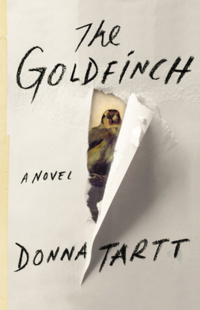
The Goldfinch by Donna Tartt
So I often choose books by their covers. As an avid reader, I know this doesn't always mean quality, but a cover can tell you a lot about the book. In the case of The Goldfinch, this is especially true, as the story evolves around a painting called "the Goldfinch" by Carel Fabritius.
The novel begins with the end. Theo Decker, our protagonist (?) is in a hotel room in Amsterdam, terrified because he has murdered someone and he believes the world is after him. He lets us know that his life so far has been a downward spiral since the passing of his mother. In fact, his mother's untimely death set all the events that lead him to this moment into play.
We then return to the story of Theo's mother's death. Despite being naturally smart, Theo is in trouble at school, and Theo's mother has been called in for a meeting. On their way there, they decide to stop by a New York Museum, and Theo's mother shows him her favourite paintings, "The Goldfinch" numbering amongst them. Before they leave, Theo's mother goes to have a last look at one of the other paintings, leaving Theo behind in a room with an old man and his beautiful granddaughter or niece. Theo has been looking at her, wondering at her story, when the bomb goes off and chaos enters his life.
In the aftermath of the blast, Theo finds himself holding the old man's hand as he breathes his last breaths. The man is rambling, telling him to take the painting, pointing at the little "Goldfinch". The old man gives Theo his ring, rambles on incoherently, and then is no more. Unable to find his mother, or the girl, Theo leaves with the painting in his bag, to return home in the hopes of finding his mother there.
Theo's mother is dead. As Theo's alcoholic father left them without a trace a year back, and Theo's grandparents claim ill health, Theo ends up living with his friend Andy and his family for a while. Andy is an awkward child in an upperclass family. His siblings detest Theo and the attention he attracts from their parents. Andy's mother is constantly preoccupied with fundraisers and luncheons, whereas the Wall Street father is battling with his mental issues. Theo manages to trace the old man who died in front of his eyes to an antique shop across town. He brings the ring and finds a warm welcome from Hobie, the dead man's business partner, and the old man's niece Pippa, who suffered severe trauma in the bombing. Theo starts visiting them on a regular basis, before Pippa, who already is the love of his life, is taken away by an aunt and sent abroad. But before Theo can get too comfortable in this new life, his father makes a reappearance and brings him to live with him and his girlfriend in Las Vegas.
Las Vegas proves to be nothing like New York. Theo's father rarely have the temper tantrums he did back home, and money seems not to be an issue. Theo befriends the Russian kid Boris, and they literally hang out day and night. Helping themselves to Boris' dad's vodka, they soon spend every afternoon in a drunken stupor, talking about life and love. "The Goldfinch" has been with Theo the whole time, but it's wrapped up nicely to prevent anyone finding it and understanding what it is. Not even Boris knows about it.
Despite the father's seeming change of behaviour, Theo realizes that he might be involved with some dodgy stuff. When the dad is killed in a car accident, Theo refuses to wait and see what child services decide to do with him, and he takes his dog and the painting and jumps on the first bus back to New York. With nowhere else to go, he once again turns to Hobie in the antique shop, and starts building his life from there.
A few years later we meet the 26-year old Theo who now is running the antique store while Hobie does his refurbishments in his workshop. We learn that Theo has been doing some dirty deals, selling fakes as real, and so forth, to prevent the shop from going bankrupt. He is now in trouble because one of the people he tricked is onto him and refuses to be appeased. "The Goldfinch" has been locked away in a safety deposit box since Theo came to New York, and hasn't been looked at. Theo is also addicted to prescription painkillers. One day Theo runs in to Andy's brother on the streets, and to his surprise, the brother is overjoyed to see him. Bad times have befallen his family. Andy is dead, and Theo starts spending time with the family again. He is soon dating Kitsey, the daughter of the house, and before Theo knows it, they're engaged. But Theo is still in love with the ever distant Pippa, and it turns out Kitsey also has a love she's been unable to let go of. When Theo runs into Boris on the street one day, Theo's life is about to change yet again.
Ah, this is a book full of surprises. New York is painted vividly and comes to life in your head. The characters are complex and ever shifting. The prose is beautiful, the plot surprising, the pace keeps you wanting to read more. At the beginning of the book I wasn't sure if Theo would turn out to be a real arsehole, or if he would be sympathetic. As I read on I liked him more and more. But it's nice for a change to not have a flawless protagonist. Boris is also a breath of fresh air, and tells us his view on right and wrong, that sometimes wrong things can lead to the right thing.
This novel is big, powerful, gripping, full of life. It must be read.
The novel begins with the end. Theo Decker, our protagonist (?) is in a hotel room in Amsterdam, terrified because he has murdered someone and he believes the world is after him. He lets us know that his life so far has been a downward spiral since the passing of his mother. In fact, his mother's untimely death set all the events that lead him to this moment into play.
We then return to the story of Theo's mother's death. Despite being naturally smart, Theo is in trouble at school, and Theo's mother has been called in for a meeting. On their way there, they decide to stop by a New York Museum, and Theo's mother shows him her favourite paintings, "The Goldfinch" numbering amongst them. Before they leave, Theo's mother goes to have a last look at one of the other paintings, leaving Theo behind in a room with an old man and his beautiful granddaughter or niece. Theo has been looking at her, wondering at her story, when the bomb goes off and chaos enters his life.
In the aftermath of the blast, Theo finds himself holding the old man's hand as he breathes his last breaths. The man is rambling, telling him to take the painting, pointing at the little "Goldfinch". The old man gives Theo his ring, rambles on incoherently, and then is no more. Unable to find his mother, or the girl, Theo leaves with the painting in his bag, to return home in the hopes of finding his mother there.
Theo's mother is dead. As Theo's alcoholic father left them without a trace a year back, and Theo's grandparents claim ill health, Theo ends up living with his friend Andy and his family for a while. Andy is an awkward child in an upperclass family. His siblings detest Theo and the attention he attracts from their parents. Andy's mother is constantly preoccupied with fundraisers and luncheons, whereas the Wall Street father is battling with his mental issues. Theo manages to trace the old man who died in front of his eyes to an antique shop across town. He brings the ring and finds a warm welcome from Hobie, the dead man's business partner, and the old man's niece Pippa, who suffered severe trauma in the bombing. Theo starts visiting them on a regular basis, before Pippa, who already is the love of his life, is taken away by an aunt and sent abroad. But before Theo can get too comfortable in this new life, his father makes a reappearance and brings him to live with him and his girlfriend in Las Vegas.
Las Vegas proves to be nothing like New York. Theo's father rarely have the temper tantrums he did back home, and money seems not to be an issue. Theo befriends the Russian kid Boris, and they literally hang out day and night. Helping themselves to Boris' dad's vodka, they soon spend every afternoon in a drunken stupor, talking about life and love. "The Goldfinch" has been with Theo the whole time, but it's wrapped up nicely to prevent anyone finding it and understanding what it is. Not even Boris knows about it.
Despite the father's seeming change of behaviour, Theo realizes that he might be involved with some dodgy stuff. When the dad is killed in a car accident, Theo refuses to wait and see what child services decide to do with him, and he takes his dog and the painting and jumps on the first bus back to New York. With nowhere else to go, he once again turns to Hobie in the antique shop, and starts building his life from there.
A few years later we meet the 26-year old Theo who now is running the antique store while Hobie does his refurbishments in his workshop. We learn that Theo has been doing some dirty deals, selling fakes as real, and so forth, to prevent the shop from going bankrupt. He is now in trouble because one of the people he tricked is onto him and refuses to be appeased. "The Goldfinch" has been locked away in a safety deposit box since Theo came to New York, and hasn't been looked at. Theo is also addicted to prescription painkillers. One day Theo runs in to Andy's brother on the streets, and to his surprise, the brother is overjoyed to see him. Bad times have befallen his family. Andy is dead, and Theo starts spending time with the family again. He is soon dating Kitsey, the daughter of the house, and before Theo knows it, they're engaged. But Theo is still in love with the ever distant Pippa, and it turns out Kitsey also has a love she's been unable to let go of. When Theo runs into Boris on the street one day, Theo's life is about to change yet again.
Ah, this is a book full of surprises. New York is painted vividly and comes to life in your head. The characters are complex and ever shifting. The prose is beautiful, the plot surprising, the pace keeps you wanting to read more. At the beginning of the book I wasn't sure if Theo would turn out to be a real arsehole, or if he would be sympathetic. As I read on I liked him more and more. But it's nice for a change to not have a flawless protagonist. Boris is also a breath of fresh air, and tells us his view on right and wrong, that sometimes wrong things can lead to the right thing.
This novel is big, powerful, gripping, full of life. It must be read.
Saturday, 30 November 2013
The Good House by Anne Leary
This is not the type of book I normally pick up. It looks too "woman's interest", and the endorsement by Jodi Piccoult didn't help either. However, there was something that drew me to it regardless of these obstacles. And I decided to give it a go. If I didn't like it after 10 pages, I could just abandon the effort and find another book to read. Well, those 10 first pages were literally devoured, and there was no way I was putting it down.
We enter the story two years after Hildy Good had to sit through the intervention staged by her two adult daughters claiming she's an alcoholic. After rehab, Hildy stayed off the booze for a while, until one night when she stumbled over some wine. Since then, Hildy's been drinking "two or three" glasses, or rather, finished the bottle, because wine doesn't taste as nice after being uncorked one night, in the evenings by herself. She has strict rules governing her drinking; she's not allowed to phone anyone or see anyone, or go anywhere, after drinking. And up until now, she's been following her rules.
Hildy lives in a smallish New England town, and her whole family has always lived there for generations. She claims to know everything that goes on in town, and the story starts when Hildy is becoming curious about one of the families that recently moved into a house she sold. It is clear that the wife, Rebecca, is not happy. Her husband spends the week in the city, and despite having two young sons, Rebecca seems restless. After her husband buys her a stunning new horse, Rebecca seems to bloom, and after seeing Peter, the therapist whose offices are above Hilyd's, Rebecca is hardly recognizable.
Rebecca doesn't seem to make friends with the other young mums in the area, and one night Hildy is sneaking wine from her garage, Rebecca drives past and stops upon seeing Hildy. Not knowing Hildy's rehab history, Rebecca joins Hildy for some wine, and a friendship starts to build between the two women.
A strong motif or doubleness in the story is that between female lunacy and reading/psychology. These two opposites become interchangeable at times in the story. Rebecca is depressed at the start of the story, then becomes happy, and then starts becoming very unstable (she might suffer from bipolar disorder). There's also a kind of magic attached to her. Her husband Brian claims that if Rebecca comes in touch with any kind of electric device such as clocks, remotes and so on, they just break. On the other hand, Rebecca performs a miracle when she first meets Hildy, where she saves the life of two horses. She will perform another "miracle" before the end of the story. On top of all this, Rebecca is very fascinated with the moon, which she loves painting. Historically, the moon is connected to "lunacy", madness, depression and bipolar disorder, which supposedly affected women more than men.
Hildy also have some strange traits. Her friends claims that she's a psychic, but Hildy herself admits it's nothing more than a scam. She "reads" people. Body language, eye movement, and so on. This allows her to deduce certain things about the people she meets. Despite how much she claims this is all a hoax, an art more than anything more supernatural, there is a moment in the book when she relies on her intuition, and makes conclusions beyond her "reading". Hildy's 8th great grandmother was accused of being a witch, whereas Hildy's own mother committed suicide when Hildy was only 11. Hildy's aunt, however, believed herself to be a clairvoyant, and made her living based on that.
The juxtaposition to these women is the psychologist Peter. Hildy's known him and his family since childhood and has nothing but respect for him. The feeling, however, is not mutual. Peter feels that Hildy's ability to "read" makes her a charlatan. This juxtaposition comes to a head when Hildy visits Peter in his office, sits in his chair while he sits in the patient's chair, and Hildy "reads" him, while challenging him that what he as a therapist is doing, is no more than a glorified "reading". At the end of the story, the doubleness between male "sense" and female "intuition" comes to a climax, and it seems that Peter is no better equipped to deal with his problems than the ladies are.
Hildy's alcoholism is a theme that runs throughout the story and challenges our perception of everything she tells us. Because Hildy is also the narrator of the story, we see everything through her eyes. She claims to handle everything well, to be a successful business woman, to have everything going for her, but as the story progresses, we see that this is not necessarily the case. There is a discrepancy between how Hildy sees herself and how the world sees her. Further, as the story progresses, Hildy's alcohol consumption is spinning gradually more and more out of control. It starts with her drinking with Rebecca, then moves on to her secretly spiking her own drink at a family dinner. Soon Hildy's experiencing blackouts, and it all comes to a head one morning when Hildy's lover Frank suggests that Hildy might be responsible for something terrible that might have happened the night before. Hungover with frayed nerves and a complete blackout, Hildy has no clue, and like her, we are dumbfounded that things could have come to this.
The Good House is quite a good title now that I've read the book. Hildy's last name is Good, so it could literally refer to her house. It could also refer to the sense of House as in a family or line, and we've already learned some of the dark history connected to the women of the Good line. Hildy is also a real estate agent, so it also works in terms of her job, which makes up an important part of the story. The first sentence in the book says "I can walk through a house once and know more about its occupants than a psychiatrist could after a year of sessions". This refers also to Hildy's ability to read people, and ironically to her inability to see herself and the secrets she's denying. Finally, a house also refers to our minds, and the rooms and secrets we keep hidden there. This is alluded to when Rebecca tells Hildy that dreaming of houses doesn't mean dreaming of work, but rather of what's going on in her psyche.
From early on in the novel there's a sense that something bad is going to happen. It wasn't until the very end that it started becoming clear what that bad thing was. Anne Leary builds up the story and the tension slowly, but with great skill.
I am so happy and so surprised at how much I liked this book. It has a serious theme about alcoholism, but although Hildy is in denial, she is sympathetic, funny, strong, and I have to say I quite like her. A definite book to recommend as Christmas gifts, but make sure you read it yourself first!
We enter the story two years after Hildy Good had to sit through the intervention staged by her two adult daughters claiming she's an alcoholic. After rehab, Hildy stayed off the booze for a while, until one night when she stumbled over some wine. Since then, Hildy's been drinking "two or three" glasses, or rather, finished the bottle, because wine doesn't taste as nice after being uncorked one night, in the evenings by herself. She has strict rules governing her drinking; she's not allowed to phone anyone or see anyone, or go anywhere, after drinking. And up until now, she's been following her rules.
Hildy lives in a smallish New England town, and her whole family has always lived there for generations. She claims to know everything that goes on in town, and the story starts when Hildy is becoming curious about one of the families that recently moved into a house she sold. It is clear that the wife, Rebecca, is not happy. Her husband spends the week in the city, and despite having two young sons, Rebecca seems restless. After her husband buys her a stunning new horse, Rebecca seems to bloom, and after seeing Peter, the therapist whose offices are above Hilyd's, Rebecca is hardly recognizable.
Rebecca doesn't seem to make friends with the other young mums in the area, and one night Hildy is sneaking wine from her garage, Rebecca drives past and stops upon seeing Hildy. Not knowing Hildy's rehab history, Rebecca joins Hildy for some wine, and a friendship starts to build between the two women.
A strong motif or doubleness in the story is that between female lunacy and reading/psychology. These two opposites become interchangeable at times in the story. Rebecca is depressed at the start of the story, then becomes happy, and then starts becoming very unstable (she might suffer from bipolar disorder). There's also a kind of magic attached to her. Her husband Brian claims that if Rebecca comes in touch with any kind of electric device such as clocks, remotes and so on, they just break. On the other hand, Rebecca performs a miracle when she first meets Hildy, where she saves the life of two horses. She will perform another "miracle" before the end of the story. On top of all this, Rebecca is very fascinated with the moon, which she loves painting. Historically, the moon is connected to "lunacy", madness, depression and bipolar disorder, which supposedly affected women more than men.
Hildy also have some strange traits. Her friends claims that she's a psychic, but Hildy herself admits it's nothing more than a scam. She "reads" people. Body language, eye movement, and so on. This allows her to deduce certain things about the people she meets. Despite how much she claims this is all a hoax, an art more than anything more supernatural, there is a moment in the book when she relies on her intuition, and makes conclusions beyond her "reading". Hildy's 8th great grandmother was accused of being a witch, whereas Hildy's own mother committed suicide when Hildy was only 11. Hildy's aunt, however, believed herself to be a clairvoyant, and made her living based on that.
The juxtaposition to these women is the psychologist Peter. Hildy's known him and his family since childhood and has nothing but respect for him. The feeling, however, is not mutual. Peter feels that Hildy's ability to "read" makes her a charlatan. This juxtaposition comes to a head when Hildy visits Peter in his office, sits in his chair while he sits in the patient's chair, and Hildy "reads" him, while challenging him that what he as a therapist is doing, is no more than a glorified "reading". At the end of the story, the doubleness between male "sense" and female "intuition" comes to a climax, and it seems that Peter is no better equipped to deal with his problems than the ladies are.
Hildy's alcoholism is a theme that runs throughout the story and challenges our perception of everything she tells us. Because Hildy is also the narrator of the story, we see everything through her eyes. She claims to handle everything well, to be a successful business woman, to have everything going for her, but as the story progresses, we see that this is not necessarily the case. There is a discrepancy between how Hildy sees herself and how the world sees her. Further, as the story progresses, Hildy's alcohol consumption is spinning gradually more and more out of control. It starts with her drinking with Rebecca, then moves on to her secretly spiking her own drink at a family dinner. Soon Hildy's experiencing blackouts, and it all comes to a head one morning when Hildy's lover Frank suggests that Hildy might be responsible for something terrible that might have happened the night before. Hungover with frayed nerves and a complete blackout, Hildy has no clue, and like her, we are dumbfounded that things could have come to this.
The Good House is quite a good title now that I've read the book. Hildy's last name is Good, so it could literally refer to her house. It could also refer to the sense of House as in a family or line, and we've already learned some of the dark history connected to the women of the Good line. Hildy is also a real estate agent, so it also works in terms of her job, which makes up an important part of the story. The first sentence in the book says "I can walk through a house once and know more about its occupants than a psychiatrist could after a year of sessions". This refers also to Hildy's ability to read people, and ironically to her inability to see herself and the secrets she's denying. Finally, a house also refers to our minds, and the rooms and secrets we keep hidden there. This is alluded to when Rebecca tells Hildy that dreaming of houses doesn't mean dreaming of work, but rather of what's going on in her psyche.
From early on in the novel there's a sense that something bad is going to happen. It wasn't until the very end that it started becoming clear what that bad thing was. Anne Leary builds up the story and the tension slowly, but with great skill.
I am so happy and so surprised at how much I liked this book. It has a serious theme about alcoholism, but although Hildy is in denial, she is sympathetic, funny, strong, and I have to say I quite like her. A definite book to recommend as Christmas gifts, but make sure you read it yourself first!
Thursday, 21 November 2013
The Night Guest by Fiona McFarlane | I grow old, I grow old
Ruth is a widow living by herself in what used to be the family's holiday house by the beach somewhere in Australia. Her two adult sons live too far away to visit often, so their contact is limited to sporadic telephone calls. Her husband passed away about a year ago, and until the night when Ruth is sure she hears a tiger prancing around in her lounge, Ruth has coped quite well alone. The arrival of the tiger, however, changes everything.
In the tiger's wake comes Frida, a lady who claims she's been sent by the government to be Ruth's "right arm". Ruth quickly gets used to having Frida around, who she thinks is from Fiji, the place where she spent her childhood. She starts reminiscing about her adolescence, and her big crush on Richard, a young doctor who stayed with her and her missionary family on Fiji. Through Frida, Ruth sends Richard a letter, and he comes to spend a quiet weekend with her. While he is there, Ruth realizes that Frida has moved into one of her son's rooms, uninvited, but when she confronts her about it, Frida claims that Ruth asked her to stay.
Soon the net that is tightening Frida and Ruth together is becoming more and more tangled. Ruth is completely dependent upon Frida, and when the tiger returns, Frida swears to protect Ruth from it. Then one night Frida fights the tiger all night, and in the morning claims to have killed it. But Ruth, in her heart of hearts, refuses to believe it.
There is a strong tension between Ruth and Frida throughout the novel. We never know if we can trust Ruth, who is old and seems to grow more and more confused with every passing day. At times I don't even know if Frida is there, or a figment of her imagination, because Ruth's perception of Frida's physical appearance keeps changing. We also don't trust Frida, whose motives are unclear. One minute she is all bright and happy, the next she is menacing and dark.
This is a different tiger story to any other I have read. But once again, the tiger seems to be associated with death somehow. Ruth has an ambivalent relationship to the tiger. She both fears it, and admires it. She doesn't want it to die. I'm not sure if the tiger then represents Ruth herself, and her ability to make sense of the world, or if, perhaps, the tiger is death itself, coming for Ruth. The Lord's return comes like a thief in the night. The tiger comes like a thief in the night, but so does Frida. The question is, who is the biggest threat to Ruth; the tiger or Frida?
This is an interesting novel about aging and facing death. Through revisiting her adolescent years in her reveries, Ruth desperately clings to life by trying to relive the past. But in the present, Ruth is forced to choose if she should trust Frida or be helplessly by herself without her.
In the tiger's wake comes Frida, a lady who claims she's been sent by the government to be Ruth's "right arm". Ruth quickly gets used to having Frida around, who she thinks is from Fiji, the place where she spent her childhood. She starts reminiscing about her adolescence, and her big crush on Richard, a young doctor who stayed with her and her missionary family on Fiji. Through Frida, Ruth sends Richard a letter, and he comes to spend a quiet weekend with her. While he is there, Ruth realizes that Frida has moved into one of her son's rooms, uninvited, but when she confronts her about it, Frida claims that Ruth asked her to stay.
Soon the net that is tightening Frida and Ruth together is becoming more and more tangled. Ruth is completely dependent upon Frida, and when the tiger returns, Frida swears to protect Ruth from it. Then one night Frida fights the tiger all night, and in the morning claims to have killed it. But Ruth, in her heart of hearts, refuses to believe it.
There is a strong tension between Ruth and Frida throughout the novel. We never know if we can trust Ruth, who is old and seems to grow more and more confused with every passing day. At times I don't even know if Frida is there, or a figment of her imagination, because Ruth's perception of Frida's physical appearance keeps changing. We also don't trust Frida, whose motives are unclear. One minute she is all bright and happy, the next she is menacing and dark.
This is a different tiger story to any other I have read. But once again, the tiger seems to be associated with death somehow. Ruth has an ambivalent relationship to the tiger. She both fears it, and admires it. She doesn't want it to die. I'm not sure if the tiger then represents Ruth herself, and her ability to make sense of the world, or if, perhaps, the tiger is death itself, coming for Ruth. The Lord's return comes like a thief in the night. The tiger comes like a thief in the night, but so does Frida. The question is, who is the biggest threat to Ruth; the tiger or Frida?
This is an interesting novel about aging and facing death. Through revisiting her adolescent years in her reveries, Ruth desperately clings to life by trying to relive the past. But in the present, Ruth is forced to choose if she should trust Frida or be helplessly by herself without her.
Wednesday, 20 November 2013
Letters from Skye by Jessica Brockmole | All is Fair in Love & War
This unassuming little book with the haunting cover really took me by surprise. As the title indicates, it is written in letter form, which is becoming more and more rare in today's world of emails and instant messaging. The letter form keeps the pace fairly quick, but it also leaves room for delays and for us as readers to have to fill in a lot of blanks ourselves.On top of being written in letter form, we also follow two parallel stories, which happen to be between mother and daughter. The stories are set respectively in the 1st and 2nd world war.
Elspeth/Sue is a young poet living on Skye. The story kicks off the day she receives a letter from a fan from America. When Elspeth writes back, she sets things in motion that will drastically change her life, and she goes from living a sheltered life on Skye to braving the ferry that she's avoided her whole life and setting forth into London and Paris to get to know David, her fan. It would be the perfectly romantic love story had it not been for the fact that Elspeth is already married to her brother's best friend Iain. Elspeth's choices will tear her family apart and leave open wounds in her life for decades.
Twenty-something years later, the raging war bring ghosts to life for Elspeth, and she sets off to see if she can make sense of her past. Her daughter Margaret is left in the loop. Since Elspeth never told her the story, Margaret decides to try find out for herself what is haunting her mother. She tracks down Elspeth's estranged brother Finlay and her grandmother on Skye who she's never met. Meanwhile, her boyfriend is a pilot in the war, and Margaret has her own love worries.
Letter by letter, we read on as Elspeth and David's friendship grows ever closer before it emerges as something else entirely. As David enlists, and therefore finds himself in Europe, the war brings them closer, before ultimately separating them completely.
Letters from Skye really grew on me the more I read. The love on every page was so pure and real. The plot is down to earth, yet heart shattering. Several times towards the end of the book I had to wipe away a few tears and put the book aside to properly digest what was happening. When I read the last page I cried happy tears.
A literary pearl, Letters from Skye will make you fall in love, break your heart, then mend it again. It tells the story of everlasting love, and as the true romantic I am, it really spoke to me.
Monday, 11 November 2013
TransAtlantic by Colum McCann
Three historical events make up Book 1 of the novel. The first one is set in 1919 and gives us an inside look into Brown and Alcock's minds before and during their flight from Newfoundland to Ireland. Their feat was the first non-stop transatlantic flight, and it was to change world travel. With them on the plane they carried a letter from Emily and Lottie Ehrlich, which was never to reach its destination.
The second story revolves around Frederick Douglass who came to Ireland in 1845 for whip up support for the abolitionist movement. The crowds generally love him, but on the sidelines, Douglass sees a starving people. The social gap is huge, and Douglass cannot fail to see the hypocrisy in his Irish supporters. Slavery, it seems, isn't only about being in chains. During his stay, Douglass inadvertently inspires his host's maid Lily to break free, and sail to America.
The last story almost echoes the first. The American senator George Mitchell is part of the Irish peace process in 1998, and makes the transatlantic flight on a weekly basis. Trying to reconcile Ireland's bloody history, where every word and turn of phrase is under scrutiny from all sides, is no easy task. To get some distance, Mitchell plays tennis, and this is where he meets Lottie Tuttle, nee Ehrlich, who ended up marrying an Irishman, and so finds herself in the middle of a life her grandmother escaped from.
Book 2 moves us away from these public figures, to the private ones. A move also from male voices to female voices. We finally get the story of Lily, the maid who sailed to America. We follow her as she makes a life for herself there, as she becomes a wife, a mother, a businesswoman. We follow her in her happiness and in her devastation.
Then Emily, the reader, who one day becomes a journalist. Emily who is happy to have no husband, but who spends every waking hour with her daughter Lottie. Emily and Lottie who watch as two pilots set forth on the very first transatlantic journey. Emily who years later, when visiting one of the pilots for a follow-up interview gets the letter back; it was never posted after they landed. Emily who must say goodbye to her daughter when they visit Ireland, as Lottie falls in love.
Lastly the story of Lottie and Hannah. Or rather, of Hannah's boy Thomas, who fell victim to the bloodshed before the peace. The lament of mother and grandmother for the end of a bloodline.
The last story. Hannah alone, with only her dog and the unopened letter her grandmother wrote all those years ago. At 72, Hannah is bankrupt and looks into selling the letter, which may or may refer to Frederick Douglass' visit to Ireland.
The letter begins and ends the novel. Unopened, it is pure potential, a story to be told. Once opened, however, the truth is irrevocable, and there is nothing left to hope for.
This is a big story. People and events crisscrossing the Atlantic. Ripples that cause currents. All in McCann's beautiful prose.
Thursday, 7 November 2013
Shotgun Lovesongs by Nickolas Butler
Shotgun Lovesongs, Nickolas Butler's debut novel is due for release early next year. It is full to the brim with love and nostalgia for smalltown life. At the core, however, is the endless story of friendships that can stand the test of time - and betrayal.
We follow the four 30-something childhood friends Henry, Lee, Ronny and Kip who all have taken very different roads in life. Henry is the traditionalist, who took over his father's farm and is living the farmlife with his wife Beth and their kids. Lee is now a successful musician who travels the world, but always returns to the town Little Wing. The former rodeo Ronny always wanted to leave, but after a drunken accident, his brain never fully healed, and he finds himself unable to leave the town where people now look at him funny and tell him what to do and not to do. And finally we have Kip, the Chicago "bigshot" who returned to town with his bride Felicia, and bought the run-down old mill in an attempt to make something happen in Little Wing.
If it sounds like this book has a very male focus, it's not the case. Henry's wife Beth has a very strong central role on the story. So do the other wives. In fact, the book might have been called 4 Weddings and a Shooting (as there is no funeral), because the action that drives the story forward all happen at the weddings of each of the men. The novel starts as Kip is getting hitched to Felicia. Lee returns to town for the wedding, and brings his Hollywood girlfriend with him. At Kip's bachelor party, Ronny meets his future wife to be. Kip manages to thoroughly alienate Lee at his wedding, and the consequence is that Kip and Felicia are ignored by everyone in town for a while.
The story then skips forward in time to Lee's Hollywood wedding in New York. Lee's paid for Henry, Beth, Ronny and Lucy, Ronny's girlfriend, to come to the wedding. The point of view shifts between the different characters, and we learn from Beth that since Kip and Felicia's wedding, she and Felicia have become very close friends. We also learn of Beth and Lee's secret history.
Once again the storyline skips until the next wedding. This time it's Ronny and Lucy's time to walk down the aisle. But not all the other 3 couples are doing so well anymore. Lee's wife has left him, and Lee's determined to stay permanently in Little Wing. Kip and Felicia are having serious problems as well. Felicia is determined to have children, but Kip cannot imagine himself being a father. Even Henry and Beth, the perfect couple, are going through hard times. In a moment of utter despair, Lee confessed his and Beth's secret to Henry, and the consequences are devastating.
The final wedding is ten years back in time. Henry and Beth's wedding. Beth the most beautiful bride imaginable. Henry and Beth carrying on traditions, in more ways that one. And while Lee is thinking back on the day his best friend married the most beautiful woman he knew, he is trying to patch things up with Henry in maybe not the smartest way.
So why this obsession with weddings? It brings people together, it breaks people apart? It brings to the table strong emotion and leaves room for confrontations, both between people and inside a person? It carries on tradition and the hopes for the future? I really find it interesting how Butles makes it one of his strongest recurring motifs in the story. I guess it might be because a wedding is symbolically one of the most important events in an adult person's life. It is a catalyst for change in a life which can indicate who you are, what you are, where you are.
Love, friendship, family, tradition, home. Butler approaches these universal themes with great tenderness and care. I'm not from a small town like Little Wing, but I really understand the complicated relationships the characters have to the town that is home to them. The contradiction between the desire to stay and the will to leave. Hopes, dreams and disappointments. I am also getting close to that age when I will look back on my life and try to make sense of my status quo and question my choices.
I am asking myself if this novel is Butler's ode to his own hometown of Eau Clair, set close to Little Wing in the novel. And is this novel his "shotgun book", to prove to himself that he can do it? If so, he has me convinced. The characters are authentic and real. All flawed, all sympathetic, all with their own reasons, their own codes of conduct, their own internal battles and contradictions. They are just people like me and you, going about their lives trying to make the best of things. If you read it, they might just inspire you.
We follow the four 30-something childhood friends Henry, Lee, Ronny and Kip who all have taken very different roads in life. Henry is the traditionalist, who took over his father's farm and is living the farmlife with his wife Beth and their kids. Lee is now a successful musician who travels the world, but always returns to the town Little Wing. The former rodeo Ronny always wanted to leave, but after a drunken accident, his brain never fully healed, and he finds himself unable to leave the town where people now look at him funny and tell him what to do and not to do. And finally we have Kip, the Chicago "bigshot" who returned to town with his bride Felicia, and bought the run-down old mill in an attempt to make something happen in Little Wing.
If it sounds like this book has a very male focus, it's not the case. Henry's wife Beth has a very strong central role on the story. So do the other wives. In fact, the book might have been called 4 Weddings and a Shooting (as there is no funeral), because the action that drives the story forward all happen at the weddings of each of the men. The novel starts as Kip is getting hitched to Felicia. Lee returns to town for the wedding, and brings his Hollywood girlfriend with him. At Kip's bachelor party, Ronny meets his future wife to be. Kip manages to thoroughly alienate Lee at his wedding, and the consequence is that Kip and Felicia are ignored by everyone in town for a while.
The story then skips forward in time to Lee's Hollywood wedding in New York. Lee's paid for Henry, Beth, Ronny and Lucy, Ronny's girlfriend, to come to the wedding. The point of view shifts between the different characters, and we learn from Beth that since Kip and Felicia's wedding, she and Felicia have become very close friends. We also learn of Beth and Lee's secret history.
Once again the storyline skips until the next wedding. This time it's Ronny and Lucy's time to walk down the aisle. But not all the other 3 couples are doing so well anymore. Lee's wife has left him, and Lee's determined to stay permanently in Little Wing. Kip and Felicia are having serious problems as well. Felicia is determined to have children, but Kip cannot imagine himself being a father. Even Henry and Beth, the perfect couple, are going through hard times. In a moment of utter despair, Lee confessed his and Beth's secret to Henry, and the consequences are devastating.
The final wedding is ten years back in time. Henry and Beth's wedding. Beth the most beautiful bride imaginable. Henry and Beth carrying on traditions, in more ways that one. And while Lee is thinking back on the day his best friend married the most beautiful woman he knew, he is trying to patch things up with Henry in maybe not the smartest way.
So why this obsession with weddings? It brings people together, it breaks people apart? It brings to the table strong emotion and leaves room for confrontations, both between people and inside a person? It carries on tradition and the hopes for the future? I really find it interesting how Butles makes it one of his strongest recurring motifs in the story. I guess it might be because a wedding is symbolically one of the most important events in an adult person's life. It is a catalyst for change in a life which can indicate who you are, what you are, where you are.
Love, friendship, family, tradition, home. Butler approaches these universal themes with great tenderness and care. I'm not from a small town like Little Wing, but I really understand the complicated relationships the characters have to the town that is home to them. The contradiction between the desire to stay and the will to leave. Hopes, dreams and disappointments. I am also getting close to that age when I will look back on my life and try to make sense of my status quo and question my choices.
I am asking myself if this novel is Butler's ode to his own hometown of Eau Clair, set close to Little Wing in the novel. And is this novel his "shotgun book", to prove to himself that he can do it? If so, he has me convinced. The characters are authentic and real. All flawed, all sympathetic, all with their own reasons, their own codes of conduct, their own internal battles and contradictions. They are just people like me and you, going about their lives trying to make the best of things. If you read it, they might just inspire you.
Wednesday, 23 October 2013
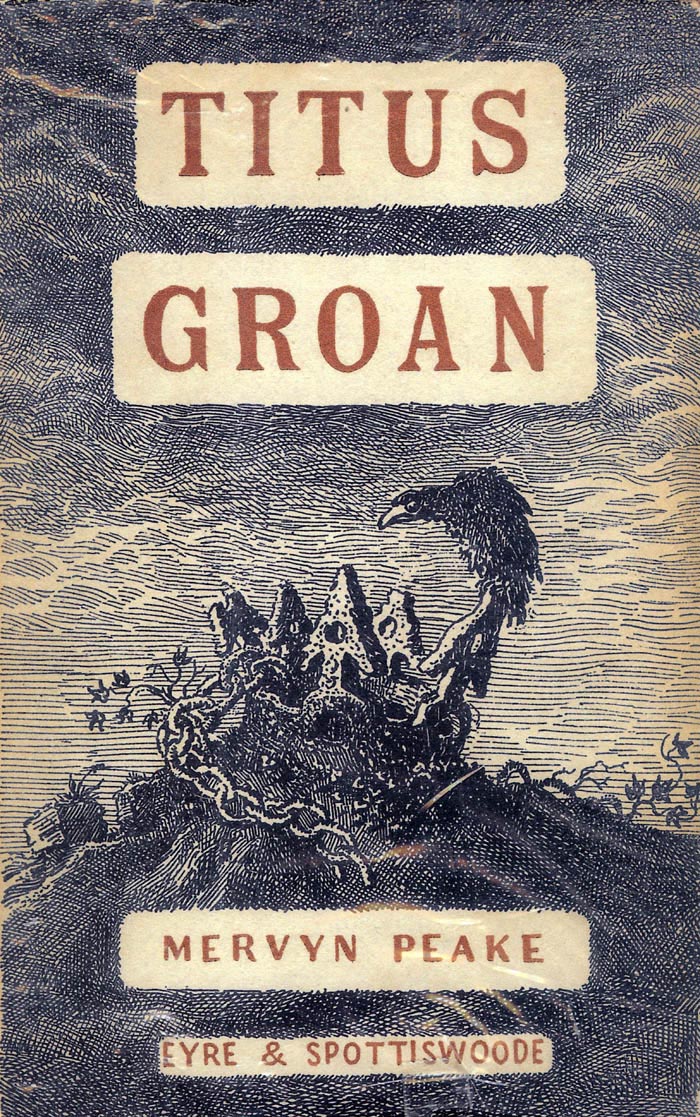
Titus Groan by Mervyn Peake
I originally bought the three books that make up the Gormenghast Trilogy a few years back on Exclusive Books' annual sale. Only now did I get around to reading the first book, Titus Groan. All I knew was that the books were supposedly fantasy. Even so, this book was completely different to anything I could have imagined. Truth be told, Titus Groan is like nothing else out there.
The book was first published in 1946, and is considered a fantasy classic. However, there is not much that puts us in mind of what I usually associate with fantasy. No magicians, no evil orks, no dragons... Yet the universe create, Gormenghast, is undeniably fantastic.
We enter this world as Titus, the new heir to the Earling of Gormenghast is born. Meticulously we follow servants around as they go about their daily duties while the happy news is spreading. One person isn't very happy, though. That is Titus' taciturn big sister Fuchsia. Nanny Slagg is now hard kept to keep the demanding Fuchsia happy, while beaming over the newborn.
Gormenghast literally stands on tradition, and Titus' father, Earl Sepulchrave, spends his days performing the daily rites expected of him, before retreating to his beloved library. His wife Gertrude is the classic cat lady, despite being married. Under their noses, drama is brewing in the castle. Titus' wetnurse has some personal issues to attend to. Swelter the chef has murderous fantasies. One of his former "minions", Steerpike, has managed to escape the kitchens, and is now making his steady way up towards power. Sepulchrave's sisters, the twins Cora and Clarice are cooped up in their rooms pondering the neglect and fall from fame. Meanwhile, an ignored Fuchsia is trying to find herself in a world of mostly old people.
The prose in this book is on another level. Stunningly and vividly written, Peake really puts us into the scenes and makes Gormenghast come to life for the reader. But this is also a surprisingly funny book. Some of the characters are downright hilarious and unforgettable for it. Nanny Slagg's constant moaning about being unloved and unappreciated. Cora and Clarice being manipulated by Steerpike. Doctor Prunesquallor and his spinster sister having a conversation. Not to mention the epic showdown between Swelter and Flay.
You kind of expect a book whose title is the name of one of the characters, to be mostly about that character. For Titus Groan this is very much not the case. The book spans in time to when Titus is just over one year old. The little we see of him is through ceremonies, and through the lives of the people around him. But towards the end we get to see that Titus is special. We just don't know how or why yet. I guess the next books in the trilogy, Gormenghast and Titus Alone will give us the answers.
This is a book to be savoured. Let Peake lead you by the hand into this oh so strange but so interesting universe. No need to rush - the words are there, and the plot will thicken soon enough. Just enjoy.
The book was first published in 1946, and is considered a fantasy classic. However, there is not much that puts us in mind of what I usually associate with fantasy. No magicians, no evil orks, no dragons... Yet the universe create, Gormenghast, is undeniably fantastic.
We enter this world as Titus, the new heir to the Earling of Gormenghast is born. Meticulously we follow servants around as they go about their daily duties while the happy news is spreading. One person isn't very happy, though. That is Titus' taciturn big sister Fuchsia. Nanny Slagg is now hard kept to keep the demanding Fuchsia happy, while beaming over the newborn.
Gormenghast literally stands on tradition, and Titus' father, Earl Sepulchrave, spends his days performing the daily rites expected of him, before retreating to his beloved library. His wife Gertrude is the classic cat lady, despite being married. Under their noses, drama is brewing in the castle. Titus' wetnurse has some personal issues to attend to. Swelter the chef has murderous fantasies. One of his former "minions", Steerpike, has managed to escape the kitchens, and is now making his steady way up towards power. Sepulchrave's sisters, the twins Cora and Clarice are cooped up in their rooms pondering the neglect and fall from fame. Meanwhile, an ignored Fuchsia is trying to find herself in a world of mostly old people.
The prose in this book is on another level. Stunningly and vividly written, Peake really puts us into the scenes and makes Gormenghast come to life for the reader. But this is also a surprisingly funny book. Some of the characters are downright hilarious and unforgettable for it. Nanny Slagg's constant moaning about being unloved and unappreciated. Cora and Clarice being manipulated by Steerpike. Doctor Prunesquallor and his spinster sister having a conversation. Not to mention the epic showdown between Swelter and Flay.
You kind of expect a book whose title is the name of one of the characters, to be mostly about that character. For Titus Groan this is very much not the case. The book spans in time to when Titus is just over one year old. The little we see of him is through ceremonies, and through the lives of the people around him. But towards the end we get to see that Titus is special. We just don't know how or why yet. I guess the next books in the trilogy, Gormenghast and Titus Alone will give us the answers.
This is a book to be savoured. Let Peake lead you by the hand into this oh so strange but so interesting universe. No need to rush - the words are there, and the plot will thicken soon enough. Just enjoy.
Monday, 21 October 2013
The Cuckoo's Calling by Robert Galbraith/ J. K. Rowling
The big reveal in the world of crime fiction this year, was that J. K. Rowling wrote the novel The Cuckoo's Calling under the pseudonym Robert Galbraith. The book got brilliant reviews before anyone knew Rowling was behind it, and after the cat came out of the bag, the book has been flying off the shelves. A nice boost for Rowling, after her less successful The Casual Vacancy.
I finally got around to reading it after one of my coworkers recommended it. It's been applauded as a great classic crime, but to me it does have a nice amount of the hardboiled in it too.
We follow private investigator Cormoran Strike, a war veteran with one leg missing, who's just been left by his fiance. Business has not been going well either, but Strike's luck is changing all in one day. Firstly his new super-sub Robin just walked into his office and started making the business seem professional (all Batmans need their Robins, right?). Secondly, Strike just got a new client. John Bristow wants Strike to investigate the alleged suicide of his sister, supermodel Lula Landry. Apart from the fact that Strike cannot afford to reject the case, there's also a personal tie between Bristow and Strike.
As Strike starts honing in on the last movements of the troubled and haunted supermodel, it becomes more and more clear that Landry was indeed murdered. But the closer Strike gets to the truth, the higher the risk of more dead bodies turning up.
Strike is an interesting character, as he's such a nice blend between the classic and the hardboiled. At times his deductive powers are equal to that of Poirot or Holmes. However, there are also times where luck more than anything is what brings him to the truth. His troubled personal life, his rather colourful upbringing, all make Strike a difficult man to predict. Even after finishing the book I feel that I have a lot more to learn about Strike himself. His substitute secretary Robin is the perfect addition to Strike.
The rest of the novel is sprinkled with characters from all walks of life. From the glitz and glam of the fashion world, to the darker world of domestic violence. From the gutter to the penthouse. The characters feel authentic and reinforces the mystery surrounding Lula Landry's death.
The novel had me going from start to finish. As I read the last few pages I felt a little bit sad to leave Strike and Robin behind. But there's no reason to believe Rowling won't continue this new world of hers, so I'm excited to see what comes next. Not just a Potter face, hey Rowling?
I finally got around to reading it after one of my coworkers recommended it. It's been applauded as a great classic crime, but to me it does have a nice amount of the hardboiled in it too.
We follow private investigator Cormoran Strike, a war veteran with one leg missing, who's just been left by his fiance. Business has not been going well either, but Strike's luck is changing all in one day. Firstly his new super-sub Robin just walked into his office and started making the business seem professional (all Batmans need their Robins, right?). Secondly, Strike just got a new client. John Bristow wants Strike to investigate the alleged suicide of his sister, supermodel Lula Landry. Apart from the fact that Strike cannot afford to reject the case, there's also a personal tie between Bristow and Strike.
As Strike starts honing in on the last movements of the troubled and haunted supermodel, it becomes more and more clear that Landry was indeed murdered. But the closer Strike gets to the truth, the higher the risk of more dead bodies turning up.
Strike is an interesting character, as he's such a nice blend between the classic and the hardboiled. At times his deductive powers are equal to that of Poirot or Holmes. However, there are also times where luck more than anything is what brings him to the truth. His troubled personal life, his rather colourful upbringing, all make Strike a difficult man to predict. Even after finishing the book I feel that I have a lot more to learn about Strike himself. His substitute secretary Robin is the perfect addition to Strike.
The rest of the novel is sprinkled with characters from all walks of life. From the glitz and glam of the fashion world, to the darker world of domestic violence. From the gutter to the penthouse. The characters feel authentic and reinforces the mystery surrounding Lula Landry's death.
The novel had me going from start to finish. As I read the last few pages I felt a little bit sad to leave Strike and Robin behind. But there's no reason to believe Rowling won't continue this new world of hers, so I'm excited to see what comes next. Not just a Potter face, hey Rowling?
Thursday, 17 October 2013
City of Ashes by Cassandra Clare | Another plunge into YA
I will shamelessly admit that I not only skipped reading book 1 in The Mortal Instruments because I saw the movie, but also that watching the movie was what finally made me want to read these books that my friends have recommended for years... And yes, I actually really enjoyed the movie! Truth be told I was expecting something very Twilight'y, but Jace and Clary kick so much more booty than Bella and Edward can ever dream of doing. It's so refreshing to have a female hero whose solution to everything isn't crying and navel-gazing. But I didn't merely like this universe simply because it isn't Twilight. City of Ashes is fast paced and action-packed. I love that there's a lot of humour and sarcasm. I almost wish I was 16 reading this book, I probably would have loved it more.
City of Ashes picks up right where City of Bones left off. There's awkwardness between Clary and her two "suitors" Simon and Jace. Seeing as the "Darth Vader" of this universe, Valentine, dropped the bomb on Jace and Clary that he's their father, the budding romance between Clary and Jace was abruptly canceled, and now Simon, Clary's lifelong bff has decided to move up to being her bf. In book 1 Valentine acquired the Mortal Cup, one of the mortal instruments of the Shadowhunters. Now, he's upping his game by going after the Mortal Sword, which will give him power to control demons. But rather than focusing on Valentine's plans, the Shadowhunters' Inquisitor goes after Jace, believing him to be one of Valentine's pawns.
Meanwhile, Clary's mom is still unconscious, some very hectic changes are affecting good old Simon, and Clary and Jace are trying to keep each other at arms length. Soon they'll all be thrown together to try throw off the hordes of demons coming to Valentines beck. There will be blood.
What I really enjoy about The Mortal Instruments is that it's so real. Fine, maybe not a lot of us have to cope with the dilemma of falling in love with someone who turns out to be your brother, but there's something real in the emotional drama. The characters feel authentic and keep expanding as we read.
In total there is going to be 6 books in this series. Book 6 is due for release in May 2014. Enough time for me to finish the other books in this series, as well as the prequel trilogy The Infernal Devices. Yay to YA!
City of Ashes picks up right where City of Bones left off. There's awkwardness between Clary and her two "suitors" Simon and Jace. Seeing as the "Darth Vader" of this universe, Valentine, dropped the bomb on Jace and Clary that he's their father, the budding romance between Clary and Jace was abruptly canceled, and now Simon, Clary's lifelong bff has decided to move up to being her bf. In book 1 Valentine acquired the Mortal Cup, one of the mortal instruments of the Shadowhunters. Now, he's upping his game by going after the Mortal Sword, which will give him power to control demons. But rather than focusing on Valentine's plans, the Shadowhunters' Inquisitor goes after Jace, believing him to be one of Valentine's pawns.
Meanwhile, Clary's mom is still unconscious, some very hectic changes are affecting good old Simon, and Clary and Jace are trying to keep each other at arms length. Soon they'll all be thrown together to try throw off the hordes of demons coming to Valentines beck. There will be blood.
What I really enjoy about The Mortal Instruments is that it's so real. Fine, maybe not a lot of us have to cope with the dilemma of falling in love with someone who turns out to be your brother, but there's something real in the emotional drama. The characters feel authentic and keep expanding as we read.
In total there is going to be 6 books in this series. Book 6 is due for release in May 2014. Enough time for me to finish the other books in this series, as well as the prequel trilogy The Infernal Devices. Yay to YA!
Wednesday, 16 October 2013
I LOVE to say I told you so. In my reviews of Hobb's books on this blog I've mentioned more than once that I hope/predict a return to these characters in what will probably be a last showdown. The tearjerking ending of Fool's Fate did indeed leave room for a reunion between my best friends in literature, and I cannot wait to see what Hobb has in store for us.
The planned trilogy will be the third trilogy about Fitz and the Fool, preceded by The Farseer Trilogy and The Tawny Man Trilogy. These books will always have a special place in my heart, as Assassin's Apprentice, book 1 in The Farseer Trilogy was my initial introduction to fantasy literature. I've been in love ever since.
Hobb has written two other series set in the same world. The Lifeship Traders and The Rainwild Chronicles might not focus on the Six Duchies where Fitz lives, but the plots and stories are connected all the same. I'm excited to see if Kelsingra, featured strongly in Blood of Dragons, the last book of The Rain Wild Chronicles, will have a function in the new Fitz and Fool Trilogy.
Those that have read the books, know that a lot of the unanswered questions from the two trilogies about Fitz and the Fool are being answered in Blood of Dragons, so I'm now curious to see if there are still answers left, or if this new trilogy will pose new questions. Certainly the Fool has remained, to an extent, a mystery.
I am so grateful to Robin Hobb for continuing to tell these beautiful, vivid stories. One day, if I have any, I hope to read her books to my kids. If not, I'll just settle for being a weird old lady who reads books to her dogs;)
If you still haven't read Robin Hobb's books, please please PLEASE read Assassin's Apprentice. It will change your life (unless you're like, a sociopath, or something).
Sunday, 6 October 2013
The Name of the Wind by Patrick Rothfuss
I’ve been
putting off reading this book for quite a while. As it is the first book in The Kingkiller Chronicles, I wanted to
wait until all the books were out (I think it’s a trilogy), but when I stumbled
over the book at a sale, I bought it, and once it was on my shelf it became
harder to put off. We’ll see how long I can resist reading book 2, The Wise Man’s Fear now that I’ve
entered this universe. Book 3 is due for release in 2014.
So I’d
heard a lot of good things about The Name
of the Wind, and naturally I had quite high expectations. What I tend to
love about fantasy literature is browsing the fantasy section in a book shop,
choosing one based on the cover, and discovering that it’s actually a gem. I
think that when something comes highly recommended, the chance of
disappointment is higher. Unfortunately this was partly the case for The Name of the Wind.
The
beginning of the novel felt tedious and slow. The characters didn’t intrigue
me, the plot felt vague, and I started to wonder if this was what the hype was
all about. Once the “real” story kicks in, my enjoyment increased, but it still
took me a long time to really get passionate about the story. The more the
story progressed, the more involved I became, and towards the end of it, I was
really quite hooked.
The
beginning of the novel places us at the Wayside Inn, where innkeeper Kote and
his apprentice Bast are going about their daily quiet lives. Business is slow,
and we learn that there is a silence shadowing Kote. At the same time, dark
forces are about, and Kote seems to know something about it. The entrance of
Chronicler onto the scene changes the silence hovering over Kote. Chronicler
has somehow managed to trace down Kote, whose real name is Kvothe, who we learn
is legendary. After some initial resistance to the idea, Chronicler manages to
persuade Kvothe to tell his story, to eliminate mere rumours from what really
happened, once and for all. Chronicler only has three days to record Kvothe’s
story, and The Name of the Wind
covers what Kvothe told of his story on the first day.
Kvothe
begins his story by stressing that his background as Edema Ruh – a travelling troupe – explains a lot about how his life
has turned out. He started his life on the road, wandering from place to place
and entertaining people. Kvothe’s first encounter with sympathy – the magic in this world – came through a man who travelled
with them for a while and taught Kvothe a lot. A prodigy, Kvothe could pick up
anything in record time.
Kvothe’s
idyllic life cannot last. One night disaster strikes. As Kvothe returns to the
campsite after a night stroll, he finds the whole troupe, including his parents
murdered. “Someone’s parents have been singing entirely the wrong songs” one of
the murderers tells Kvothe. Kvothe’s father was working on a song about the
Chandrian, a mythical group of men known to leave death and blue flame in their
wake. Can the childhood horror be true? Are the Chandrian real?
After the
death of his parents, Kvothe’s life is thrown into turmoil. After spending
months in the wild playing on his father’s lute, Kvothe makes his way to the
big city nearby. Kvothe spends three hard years in Tarbean before he remembers
his new mission in life, to find the Chandrian and avenge his parents.
Although he
is still young, Kvothe decides to try to get admitted to the University. A
miracle secures Kvothe’s admittance, but his arrogance and impatience quickly
ensures Kvothe enemies among the masters of the University as well as the other
students. After being denied access to the Archives, Kvothe realises that the
way to find the Chandrian will be longer than anticipated.
The rest of
the book focuses on Kvothe’s path from E’lir to Re’lar at the University, his
challenges and successes, and Denna, the love of his life.
There is a
lot of foreshadowing in this book. Before Kvothe starts his story, he gives a
summary of some of the things he is known for, which makes sense considering
that in this world, Kvothe’s name is legendary. Rothfuss also uses a lot of
fairytale traits. Numbers like 3 and 7 are given significance. Myths and song
verses come to have a deeper meaning within the context of the story.
In the
middle of Kvothe’s telling, things are still happening at the Wayside Inn,
reminding us that we are being told a story, while life goes on in the present
time. This comes to a climax towards the end of the book when the regular
customers come for their evening drinks and a stranger walks in.
The Name of the Wind is beautifully written and vividly
told. Although Kvothe at times is an arrogant, impatient idiot, I come to care
for him and in a sense understand him. The hunger to learn more about him is
definitely there, so I’m gonna have to read The
Wise Man’s Fear soon.
Catch-up vol 2: Jacob’s Folly, Lolito, Let the Games Begin, and Mr Penumbra’s 24-hour Bookshop
Once again
I’ve been too busy to blog on a regular basis, so it’s time I wrote a few lines
about the books I’ve been reading lately. The books I'm briefly reviewing here are all funny and excellent reads. So don't let my very short reviews stop you from devouring them!
Jacob’s
Folly by Rebecca Miller
Who
wouldn’t like to be a fly on someone’s wall? But is it as lucrative to be
reincarnated 300 years after your death as a fly? Jacob is delighted to find
that his reincarnation has wings, but he is less enthused when he realises he
has come back to earth as a fly rather than an angel. Jacob can see into the
lives of the people he “stalks”. Leslie is middleaged, married, and desperate
to be everyone’s saviour. 21-year old Misha is in need of saving. Her family
are conservative Jews, so Misha’s dreams of becoming an actress don’t exactly
fit. Since Jacob is now a fly, he’s not feeling particularly happy about his
maker, so he decides to play with Leslie and Misha’s lives, and give them a bit
of a push in the right/wrong direction.
As Jacob
nudges Misha and Leslie closer together, we also learn about Jacob’s life as a
Jew in Paris in the 1700s. Jacob goes from being the miserable husband of his
“touched” child wife, to the servant of one of the French nobility. After
becoming involved with his master’s mistress, Jacob is thrown out, only to find
his real path as an actor.
Jacob’s Folly is a delightful read. At times laugh-out-loud
funny, at times tear-jerking sad, it gives insight into life for (Conservative)
Jews then and now. Furthermore, it is an intriguing story where we’re
constantly wondering where it’s all going and what the whole purpose really is.
Kind of like in real life.
Lolito by Ben Brooks
Lolito is a modern reimagining of the Nabokov’s
classis Lolita. The main character is
a 15-year old boy who has just found out that his girlfriend cheated on him. In
an attempt to deal with his pain and confusion, he enters an online adult chat
where he becomes involved with a woman in her 40s. Pretending to be older than
he is, their chat soon escalates to cyber sex and from there to them meeting in
person in London.
The
teenagers we meet in Lolito are
highly sexualised and at the same time extremely desensitized. The drink and do
drugs without it seeming in any way to be a big deal. Our protagonist watches
videos of cats being killed on youtube without any emotional reaction. Facebook
statuses and newsheadings just filter right through him. However, there is a
strong sense that he is really not able to deal with his current emotional
state. I strongly feel that the book is asking the question “in today’s digital
world, where any image is accessible at the push of a button, are children
really children anymore?”. I’m not sure if the book provides a lot of answers,
but it sure makes me stop and think.
Lolito is funny and well-written, and brings up
important topics about teenages in today’s world.
Let the
Games Begin by Niccolo Ammaniti
Outrageous,
crazy and hilarious, Let the Games Begin
is truly something else. The party of the century is happening in Rome, and
everybody is going. We follow a failed Satanist and a confident author as their
make their separate ways to this party of parties. The Satanist has decided to
make his final stand, and use the party to sacrifice a former Metal-singer who
turned Pop. The author is convinced that someone is out to get him (possibly
the Finnish Tree-Mafia!), so he spends his time at the party jumping from woman
to woman to elope with. All is going well until the hunt begins. Who is hunting
who?
Mr
Penumbra’s 24-hour Bookshop by Robin Sloan
This novel
successfully brings together the physical book and Google’s power and
awesomeness, if I can put it that way. It’s very much a book for our generation
of late-twenties who are “going nowhere” careerwise due to the recession. Our
protagonist Clay is stuck working the night shift at Mr Penumbra’s 24-hour Bookshop
after being retrenched. But nobody seems to be buying books anymore, and our
hero soon start suspecting that the shop is merely a front for a very strange
bookclub. In an effort to understand what this “bookclub” is all about, Clay stumbles upon a much more complex mystery than he could ever have
imagined. And as chance would have it, even the code breaking machines of
Google are unable to decipher it.
A
thoroughly enjoyable read with lots of humour and heart. Perfect for passionate
lovers of books – and Google. Here is something for the fantasy lover as well,
and if you have a nerdy bone, that’ll be tickled too! Loved it.
Subscribe to:
Posts (Atom)